Everything You Need to Know (and more!) about the Downtown Streets Study
January 6, 2025
In November 2024, the City of Fredericksburg released the results of a year-long transportation study that explores major potential changes to Downtown Fredericksburg’s traffic network.
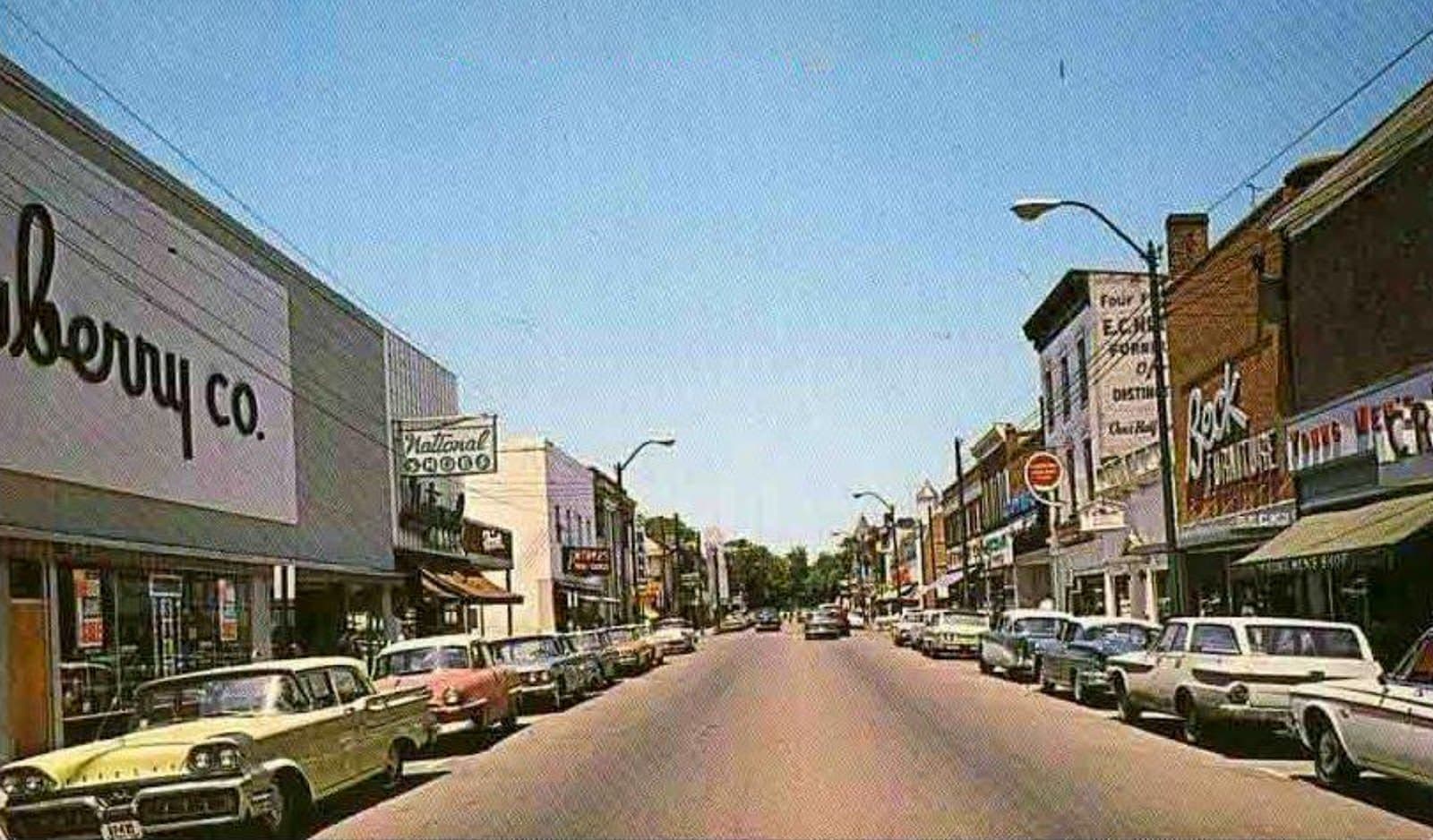
In November 2024, the City of Fredericksburg released the results of a year-long transportation study that explores major potential changes to Downtown Fredericksburg’s traffic network. This study was pursued to evaluate and implement recommendations adopted in the comprehensive plan to improve safety downtown, and demonstrates the City’s willingness to consider best practices as successfully implemented elsewhere in the state and country.
The potential changes, if implemented, would be the most significant change to Downtown’s street grid in over 50 years. Here are the three main topics that are covered in the Study:
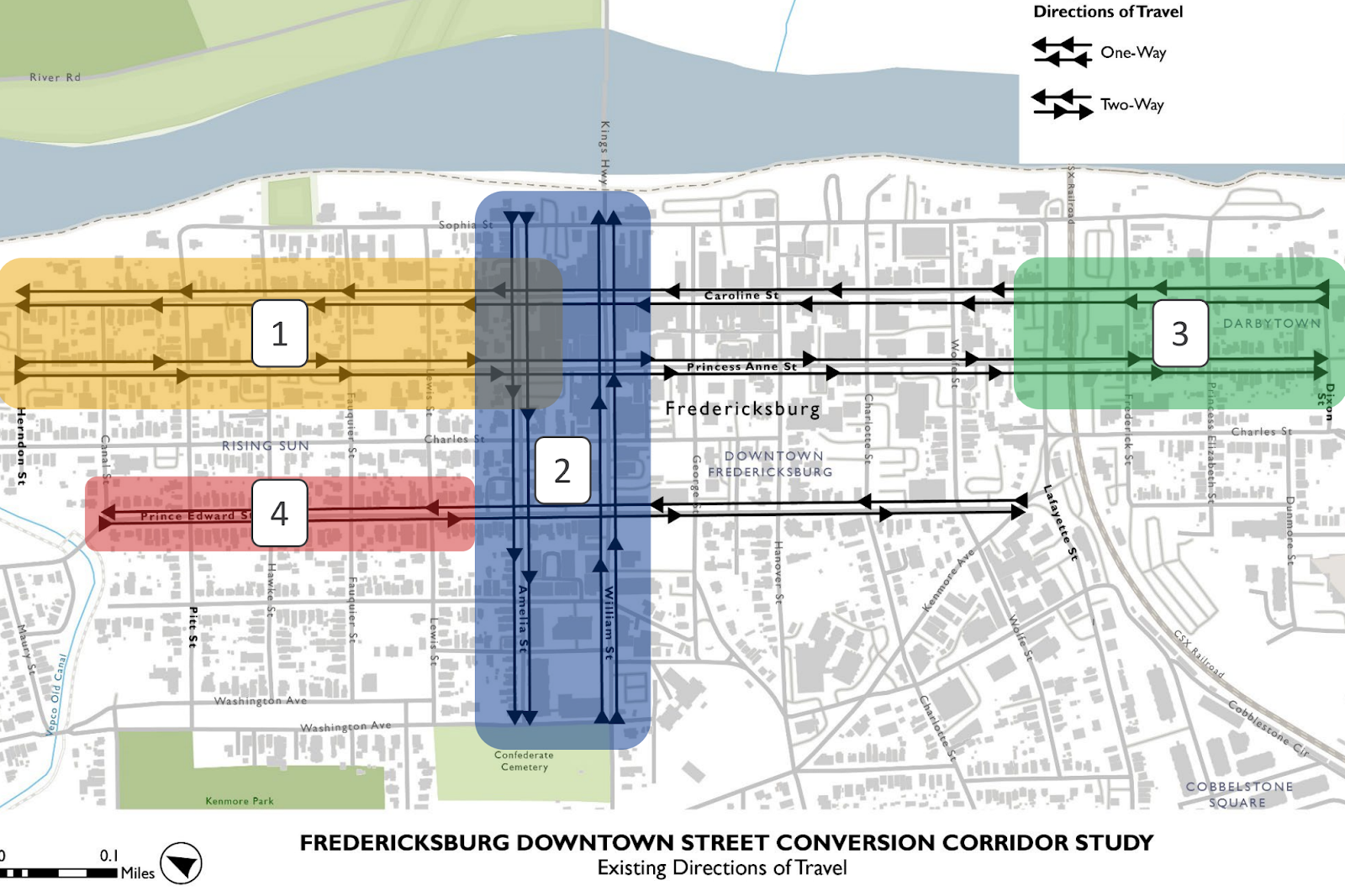
- The reversion of selected 1-way, 2 lane “boulevard” pairs back into 2 way streets, as they existed from Fredericksburg’s establishment until roughly 1970
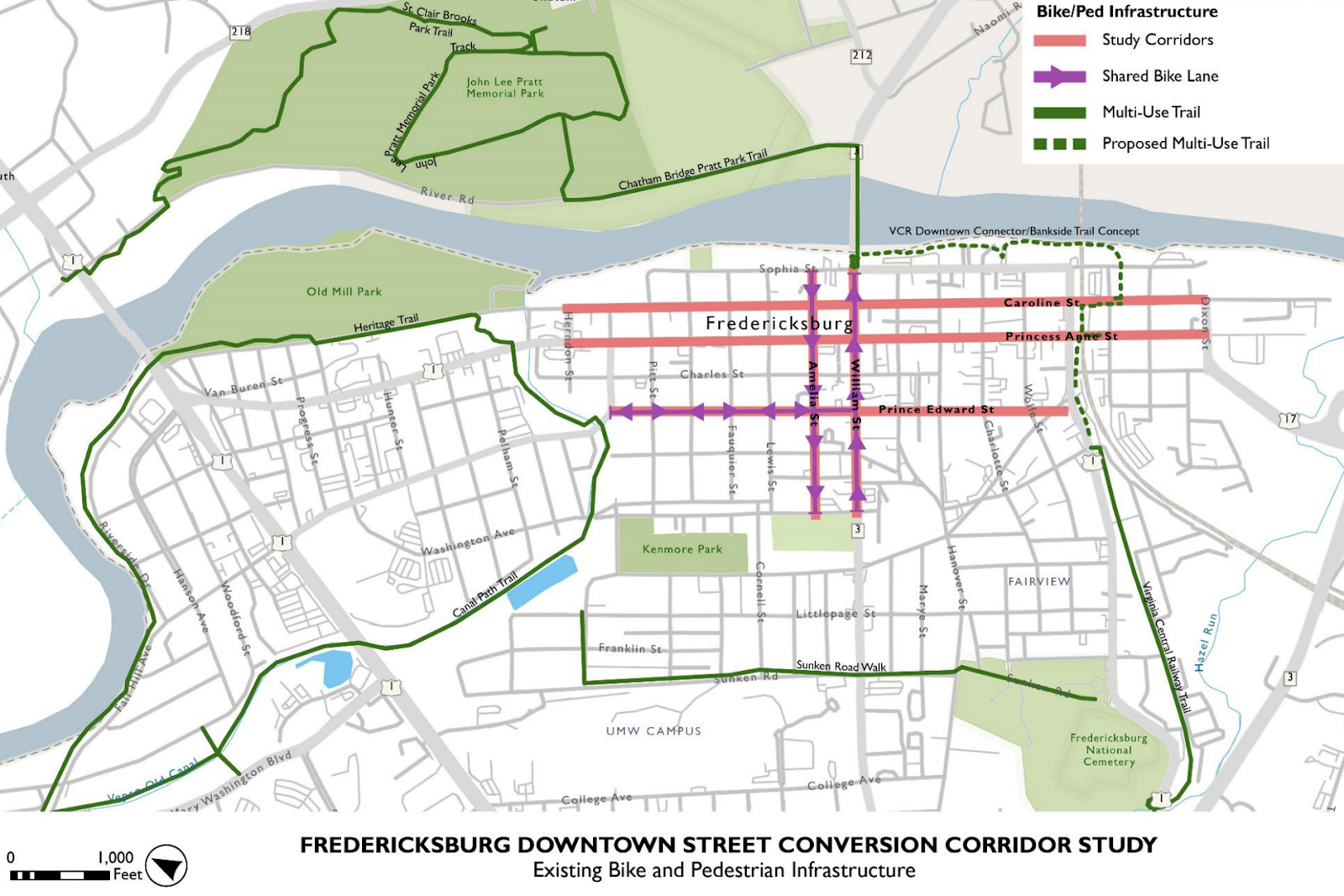
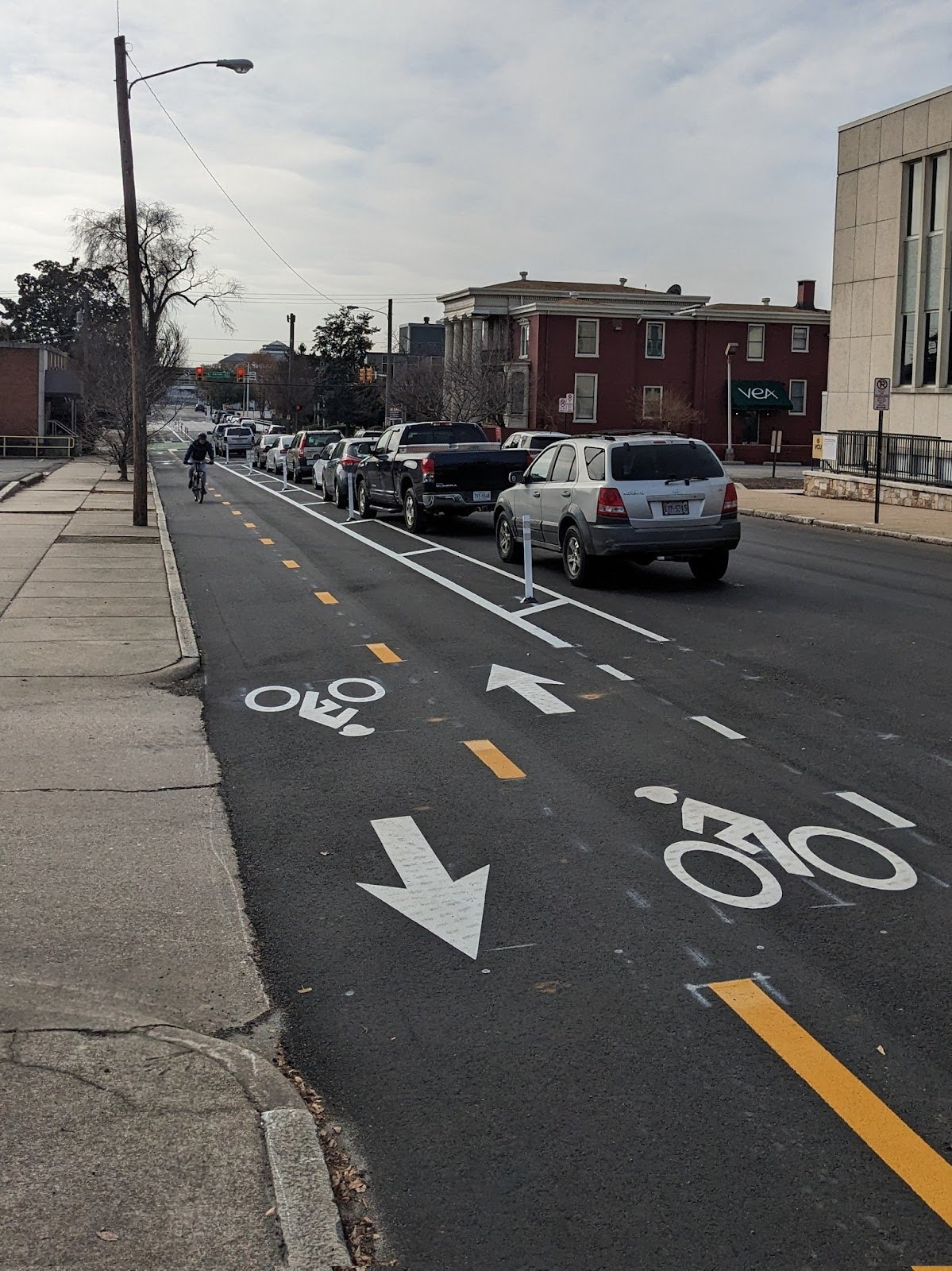
- The extension of several protected pathways into Downtown
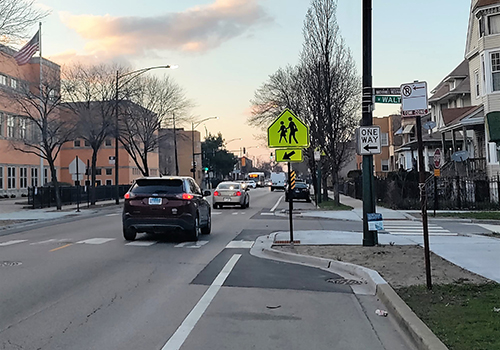
- The improvement of intersections to ensure safer and more efficient movement for drivers, bikers and pedestrians alike.
There is a LOT to unpack in this study, which you can read for yourself in full by clicking here and here. We did the hard work to help answer some questions you may be asking.
Why are we doing this? What is the City hoping to accomplish?
In the 1960s and ‘70s, City leaders converted portions of Caroline, Princess Anne, William and Amelia Streets from two-way streets into one-way pairs to facilitate through-traffic and reduce congestion downtown. This new system enabled drivers to pass and avoid slowdowns at intersections, helping through-traffic navigate the City at high speeds. Over the following decades, highway bypasses around the City were built and expanded, allowing for drivers traveling between suburban destinations to circumnavigate the City Center and eliminating the need for high-capacity streets downtown. But the one-way streets have remained, creating a friendly environment for speeding thru-traffic and a louder and more dangerous environment for everyone else.
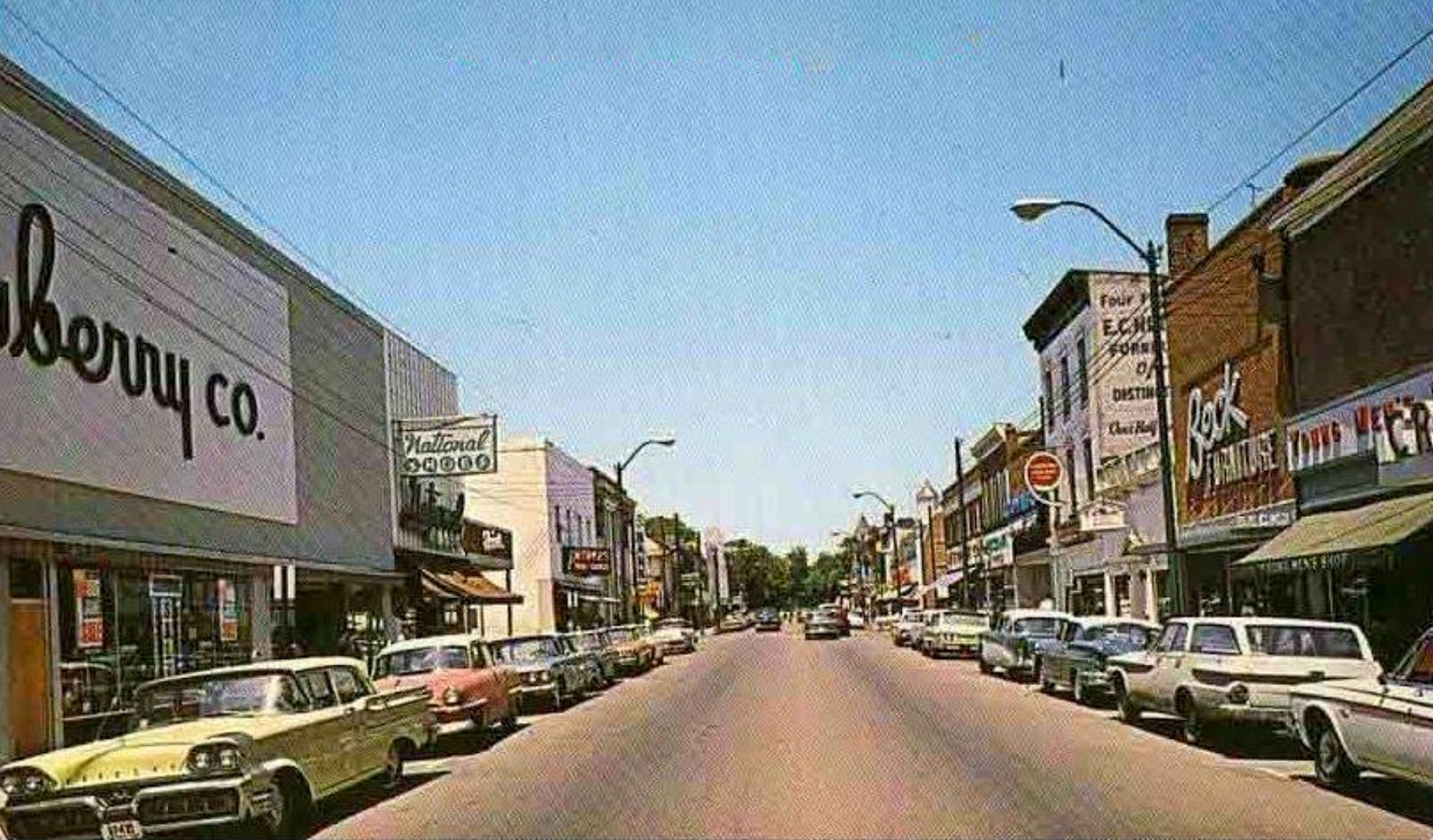
In recent years, Downtown has flourished with economic activity built largely around foot traffic. In 2020, City Council supported this vision by unanimously adopting the Area 7 Small Area Plan, which proposes to “improve pedestrian safety and preserve the character of Downtown by slowing traffic particularly in residential areas, and to improve accessibility to homes and businesses” by pursuing the following: