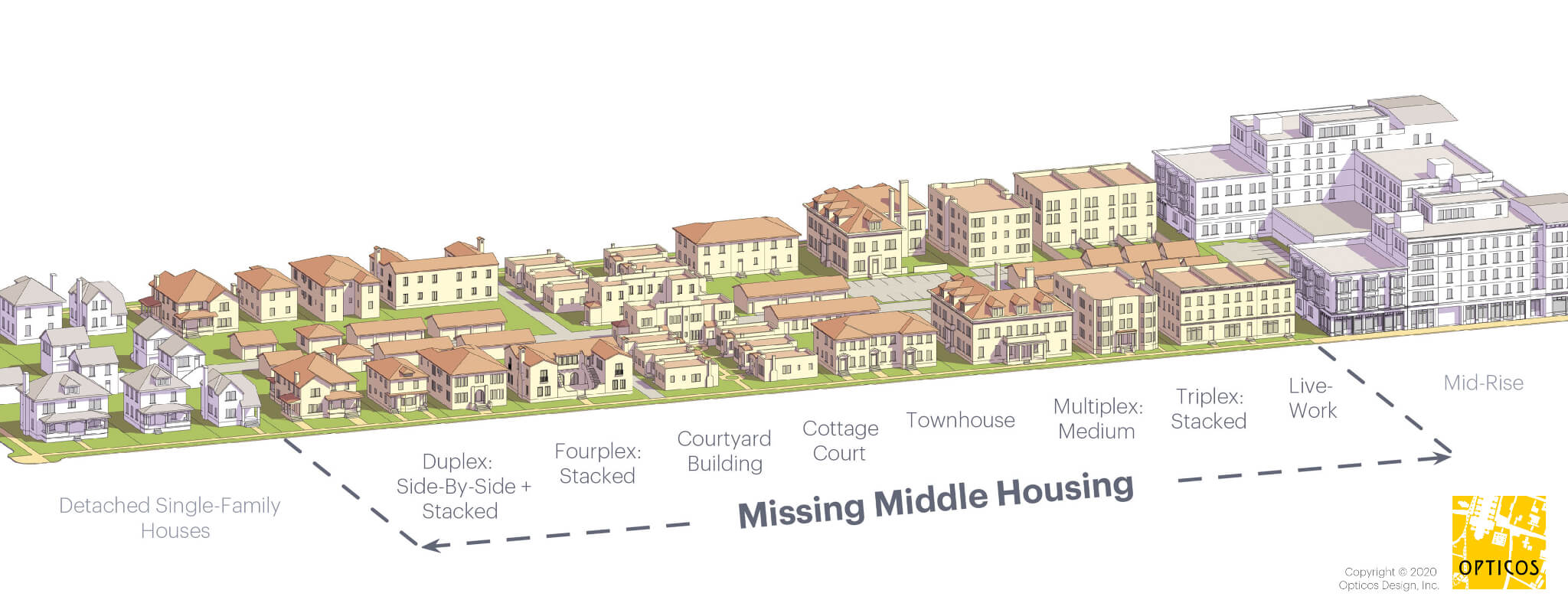
What Will Be the Boundaries of the Missing Middle in Asheville?
August 8, 2023
This member commentary post does not necessarily reflect the views of Asheville For All or its members.
This member commentary post does not necessarily reflect the views of Asheville For All or its members.
I’m going to share some half-formed thoughts—questions, really—about the directions that “missing middle” zoning reforms might take here in Asheville. If you’re not familiar with what “missing middle” means, or how the city is currently undertaking steps that will likely produce “missing middle” changes to our zoning codes next year, please check out Asheville For All’s missing middle info page.
* * *
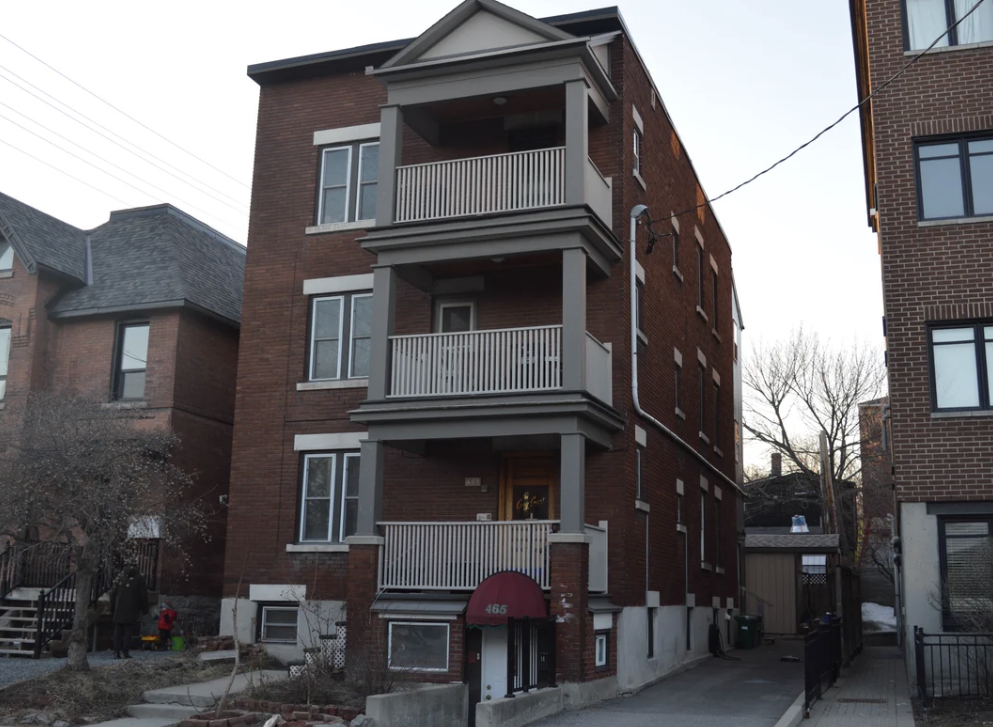
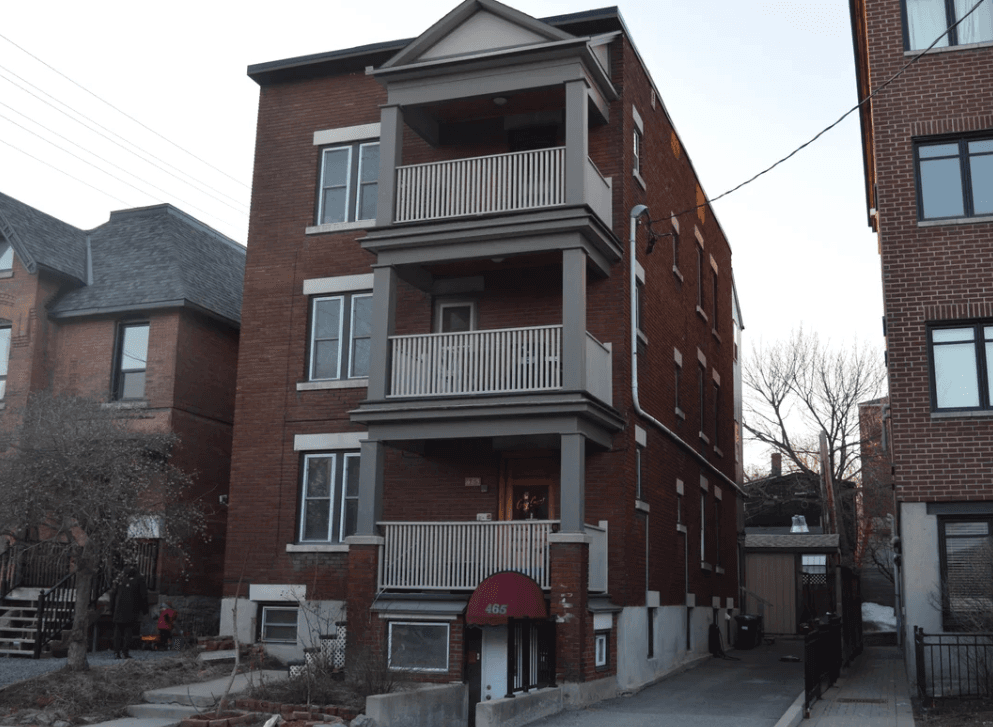
The building looks a lot like other prewar middle-type residential buildings. But the specifics are worth digging into.
The caption on the post noted that this is a “family friendly” four-plex. The units span the entire length and width of their respective floors. It’s hard to say, but they might be 1,000 square feet or more, and could presumably hold three bedrooms. Unlike many of the Sears catalog apartment buildings that one typically finds pictured online, the homes in this building have windows on three or four sides.1
(I say this in nearly every of one of my posts, but as a reminder: these homes could be apartments that one rents, but they could also be apartments that are owner-occupied, in which case we call them condominiums. Condos aren’t limited to high-rises and large complexes, just as rental apartments aren’t.)
Remember, the central idea behind adding denser homes like this fourplex to places with high land values is this: by placing four families on the same lot, those four families are effectively teaming up and pooling their resources with respect to land costs, and this allows them to “compete with” or “outbid” the wealthy. As a bonus, the neighborhood gets a bigger tax base, and more people in one place means that the neighborhood becomes attractive to businesses within walking distance, and more suitable for amenities and public transit.
Also remember: the idea behind missing middle reforms in particular, as opposed to other kinds of multifamily upzonings, is to try to find a balance between adding density to existing neighborhoods, and appeasing the current residents of those neighborhoods. We get more benefits out of building apartments in core residential areas—ones that already close to walkable commercial districts, downtown, workplaces, transit routes, and other amenities—than in some other locations. It simply makes more sense to build more homes in North Asheville than it does off of, say, Smokey Park Highway. But the resistance to neighborhood change in North Asheville is going to be far more fierce than that on the undeveloped periphery, or on a commercial corridor. (Say, Brevard Road south of I-40, for example.) So, implicit in the idea of adding more missing middle homes to Asheville is the idea that we are talking about those commercial corridors or peripheries where you are already likely to see big, acre-plus, multifamily developments being built.