Building Dense Multi-Family Housing in Vacant Lots Does Not Cause Displacement (or: How to Misinterpret an Affordable Housing Study)
November 28, 2023
This member commentary post does not necessarily reflect the views of Asheville For All or its members.
This member commentary post does not necessarily reflect the views of Asheville For All or its members.
Earlier this month, the Citizen-Times reported on a presentation by Thrive Asheville, where that organization presented some results from an ongoing study about inequity in Asheville’s housing market.
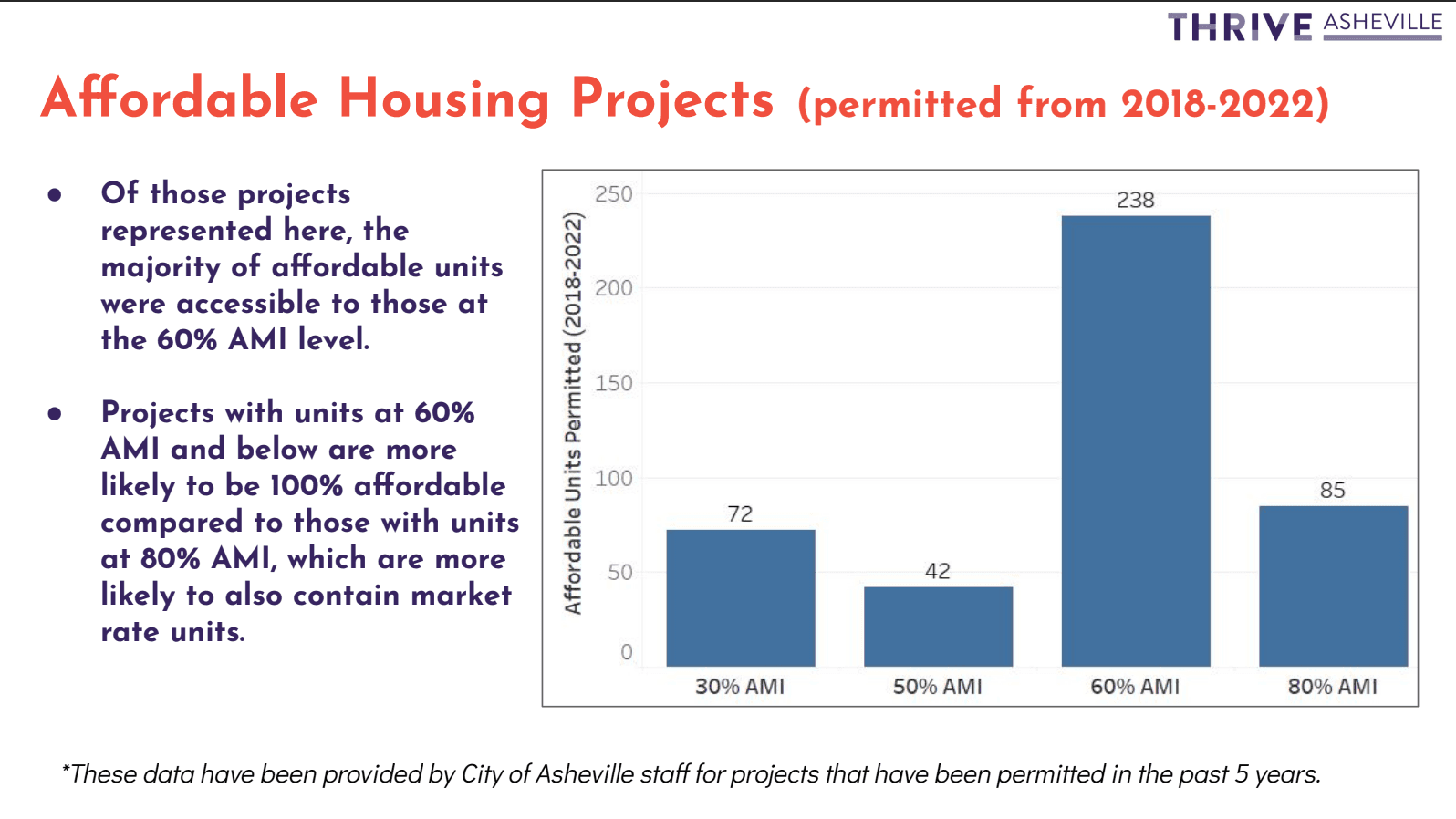
The study, the Citizen-Times suggests, shows that Asheville’s “affordable housing” policy may “exacerbate racial and gender gaps.” That’s because incentives such as the city’s density bonus tend to promote the allocation of subsidized homes at 80% of AMI (or area median income), rather than 30-60% or lower. So policies geared towards regulating affordability are helping people that need it, but they may not be helping people that need it the most.
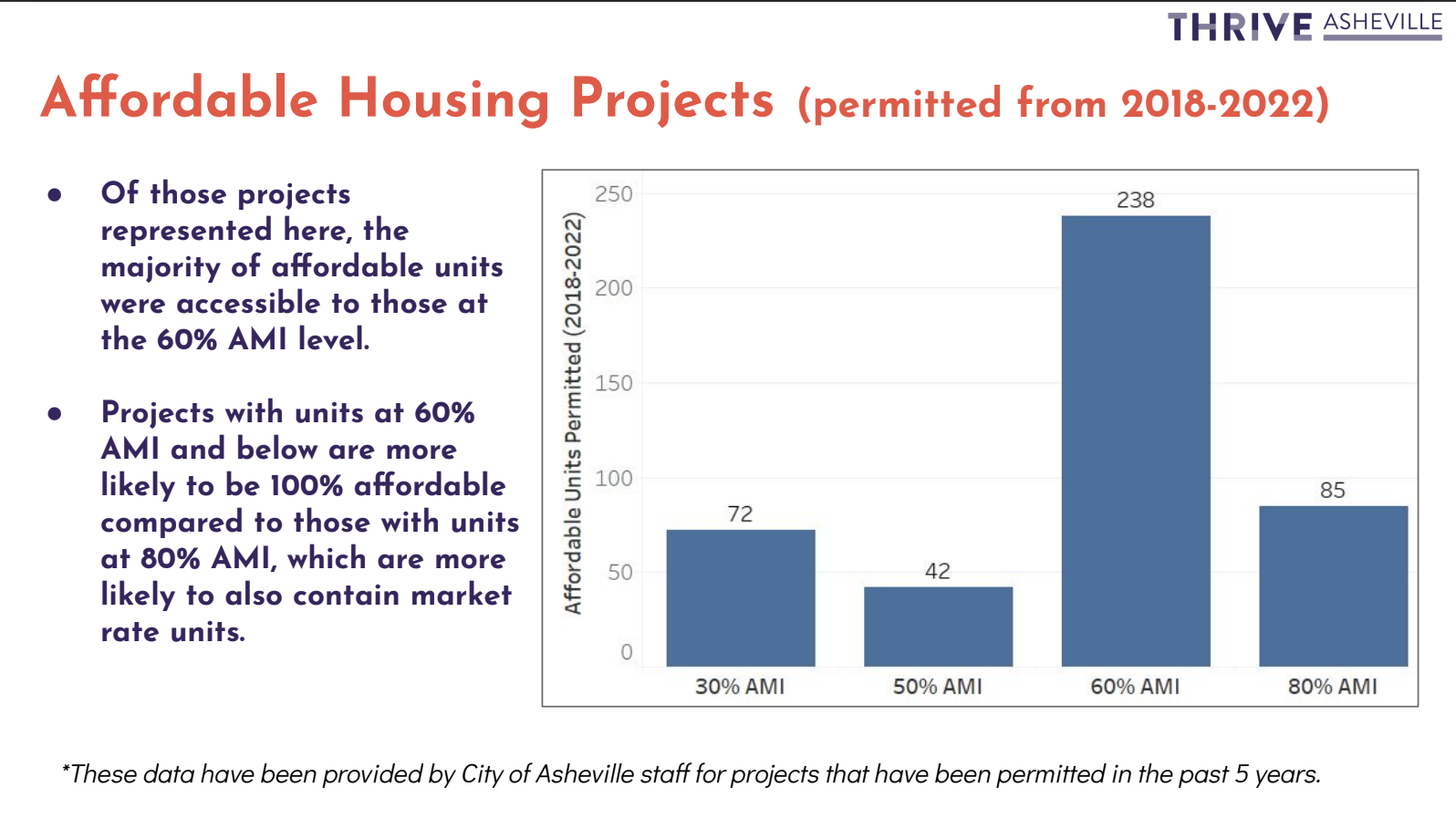
A chart from Thrive Asheville’s recent presentation.
Following a discussion of some of the study’s findings, the article then quotes City Councilor Antanette Mosley, who interprets the findings as saying that building new dense, mixed-income housing will cause “gentrification.” She gives an example of the former Kmart parking lot on Patton Ave., which was once planned to become a mixed-use development, as a case where adding more homes to a plot of land that had none before would have sped up displacement. (That lot is now destined to become another suburban-style shopping center anchored by an Ingles supermarket.)
So let’s talk about how this report from Thrive might have been misinterpreted.
What Thrive Is Saying Makes Sense . . .
Again, at the core of Thrive’s data is an argument about gaps. Given a set of resources that are severely supply-constrained, if you take extra effort to provide those resources to one group of people, but aren’t able to provide those same resources to another group of people that have higher needs, of course you are going to create a gap between those two groups.
This makes sense, and we should take its implications seriously.