Letter to Asheville City Council in Support of 93 & 95 Springside Road
July 24, 2025
July 29th UPDATE: The public hearing for this development has been continued to the end of August.
July 24, 2025 Updated: July 29, 2025
July 29th UPDATE: The public hearing for this development has been continued to the end of August.
You can find more information about the development in the city staff report from the May Planning and Zoning Commission meeting here, and the city staff slides from the same meeting here (pp.6-27).
Asheville For All sent the following letter to Asheville City Council ahead of the council’s July 29th meeting.
* * *
Dear Asheville City Councilors,
We are writing to offer support for the conditional zoning at 93 & 95 Springside Road on the council’s July 29th agenda.
This is a small number of infill homes. Nonetheless, it’s the addition of infill homes like this, spread throughout the city—and in combination with more ambitious land use reforms—that is what’s needed in order to help make a difference in Asheville’s housing shortage.1
This is not a dense development, and its configuration is fully compatible with the city’s Future Land Use Map. Its impact on traffic will likely be inconsequential.
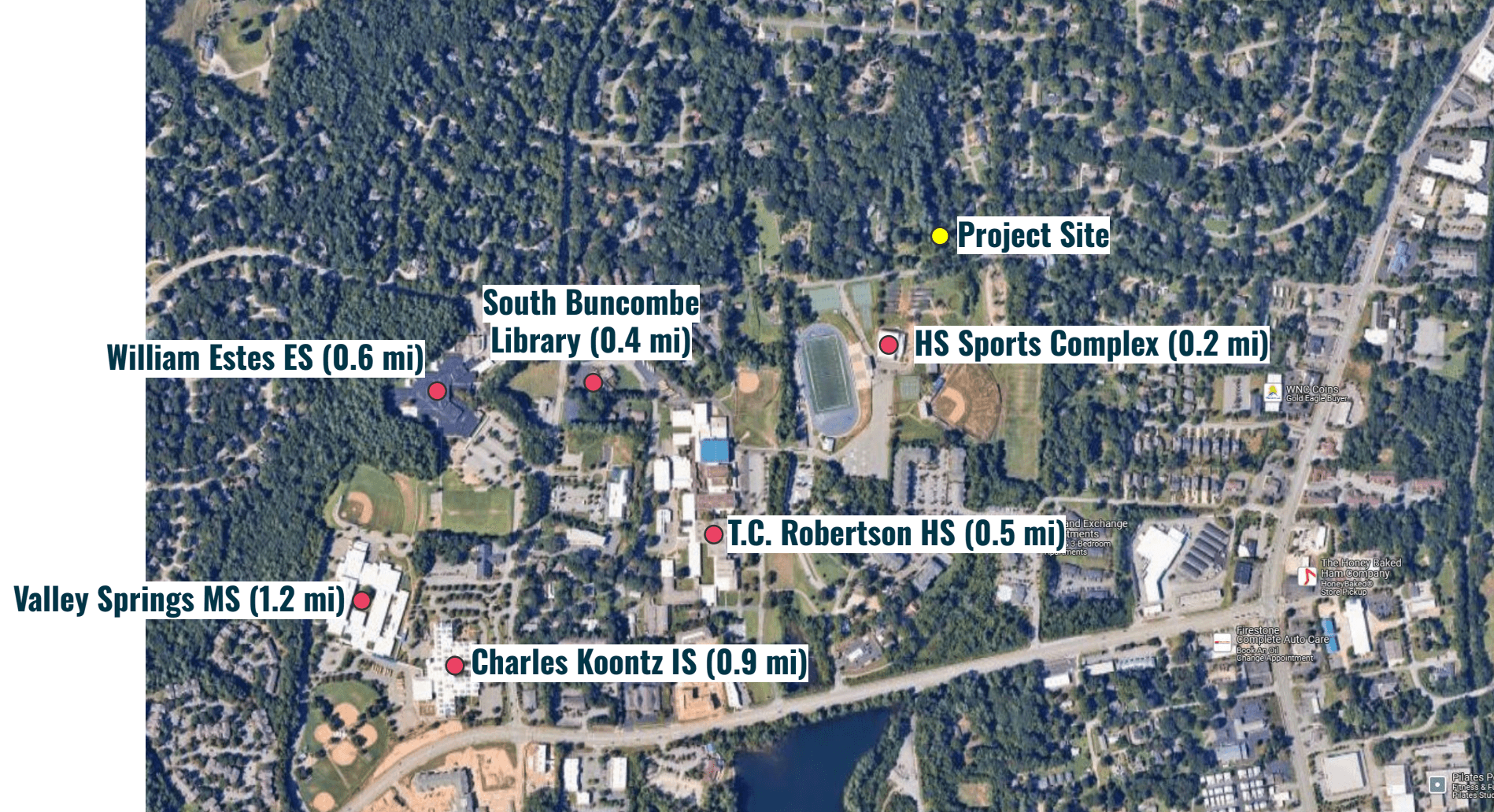
What troubles us the most about opposition to these new homes is that anyone would want to prevent new families from joining a community that is so close to multiple public schools. We understand that existing residents are concerned about traffic during school hours. But it is shortsighted to believe that pushing families further out is the solution. Preventing families from living near schools will only add to traffic, create more lengthy drop-off/pick-up lines, and raise the county’s costs for school bus service.
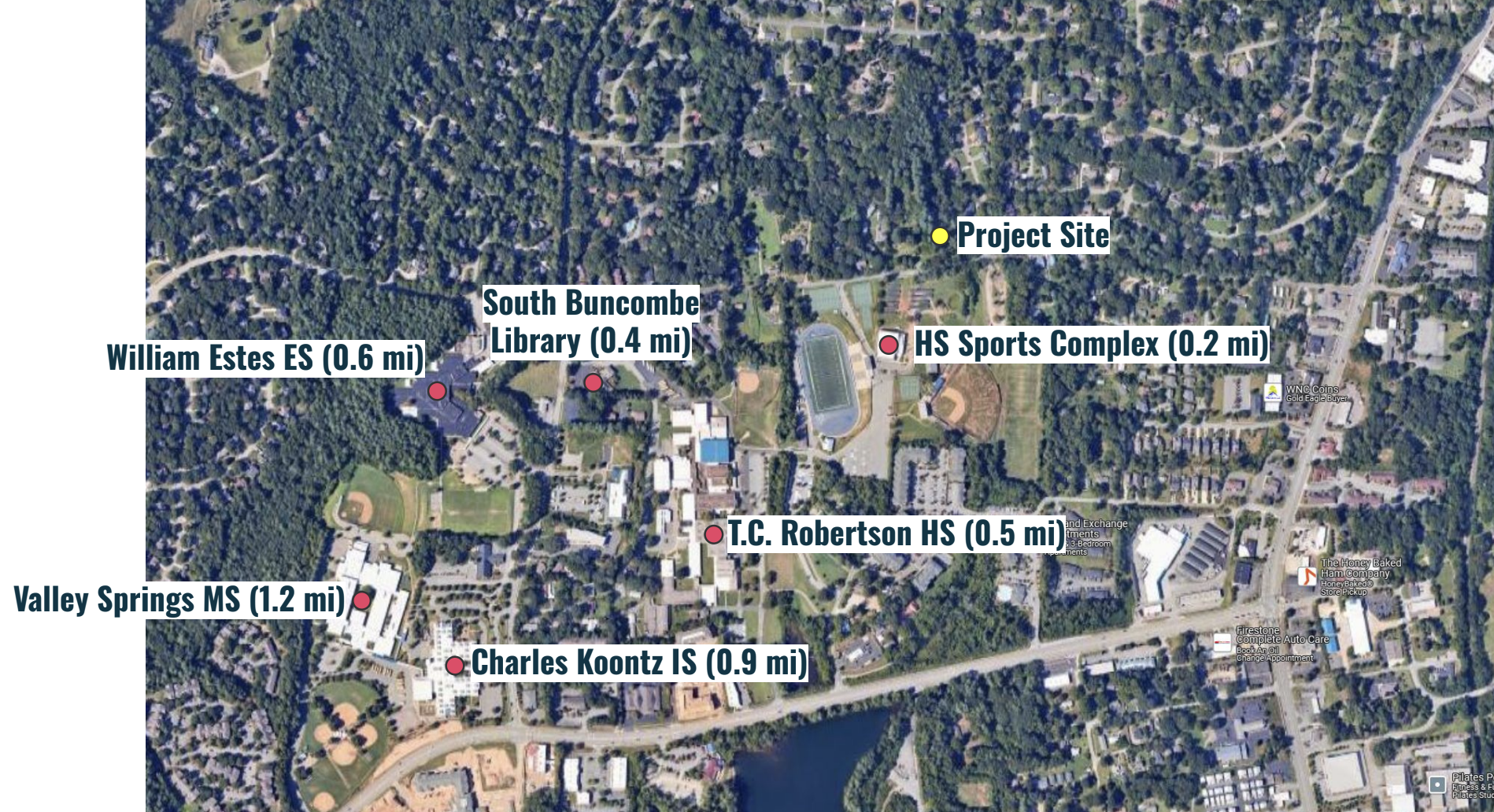
Newly proposed homes in South Asheville will be within walking distance of several Buncombe County public schools. Source: City of Asheville.
It will also rob children of the potential experience of being able to visit their schools, and the friends they make there, without having to be driven around. And it will rob existing families of the chance to experience a more vibrant neighborhood for young people. Studies have shown that schools strengthen a “sense of place” for nearby households, and that students who can walk or bike to school perform better academically.