What Asheville Can Learn from Portland on “Missing Middle” Housing
February 18, 2026
This member commentary post does not necessarily reflect the views of Asheville For All or its members.
This member commentary post does not necessarily reflect the views of Asheville For All or its members.
Asheville is stuck in an ongoing conversation regarding “missing middle housing reforms.” More than two years ago, the city’s “Missing Middle Housing Study and Displacement Risk Assessment” was completed, which included recommendations that would see the city’s housing supply expanded and diversified. The goal: to ease housing costs and increase options for renters and owners, while also welcoming more working people and their families into the neighborhoods where we need the homes the most—those closest to the city’s jobs, opportunities, and transit.
Inaction appears to be rooted in a fear that applying pro-housing reforms to our zoning code will make the problem worse, not better. We’ve written a bunch on this subject already. We’ve noted that no other city that has implemented broad, common-sense “missing middle” residential reforms has experienced troublesome speculation or displacement.
And the confusion at times appears to be a question of what exactly “displacement” means. We borrow from Asheville’s own Affordable Housing Plan to understand that displacement has a myriad of causes, but most generally it is exacerbated when high demand for housing is not met with policies that promote more housing infill and a greater diversity of housing typologies in our high-opportunity neighborhoods.
We also believe that the evidence is exceedingly clear that the best way to promote more housing options, greater affordability, and greater equity in housing is to apply pro-housing zoning reforms and incentives across a broad geographical area.1
The Portland Example
All of the above is rooted in various studies and reports put out by housing policy researchers. But that can all seem a bit abstract., so let’s drill down on one single example.
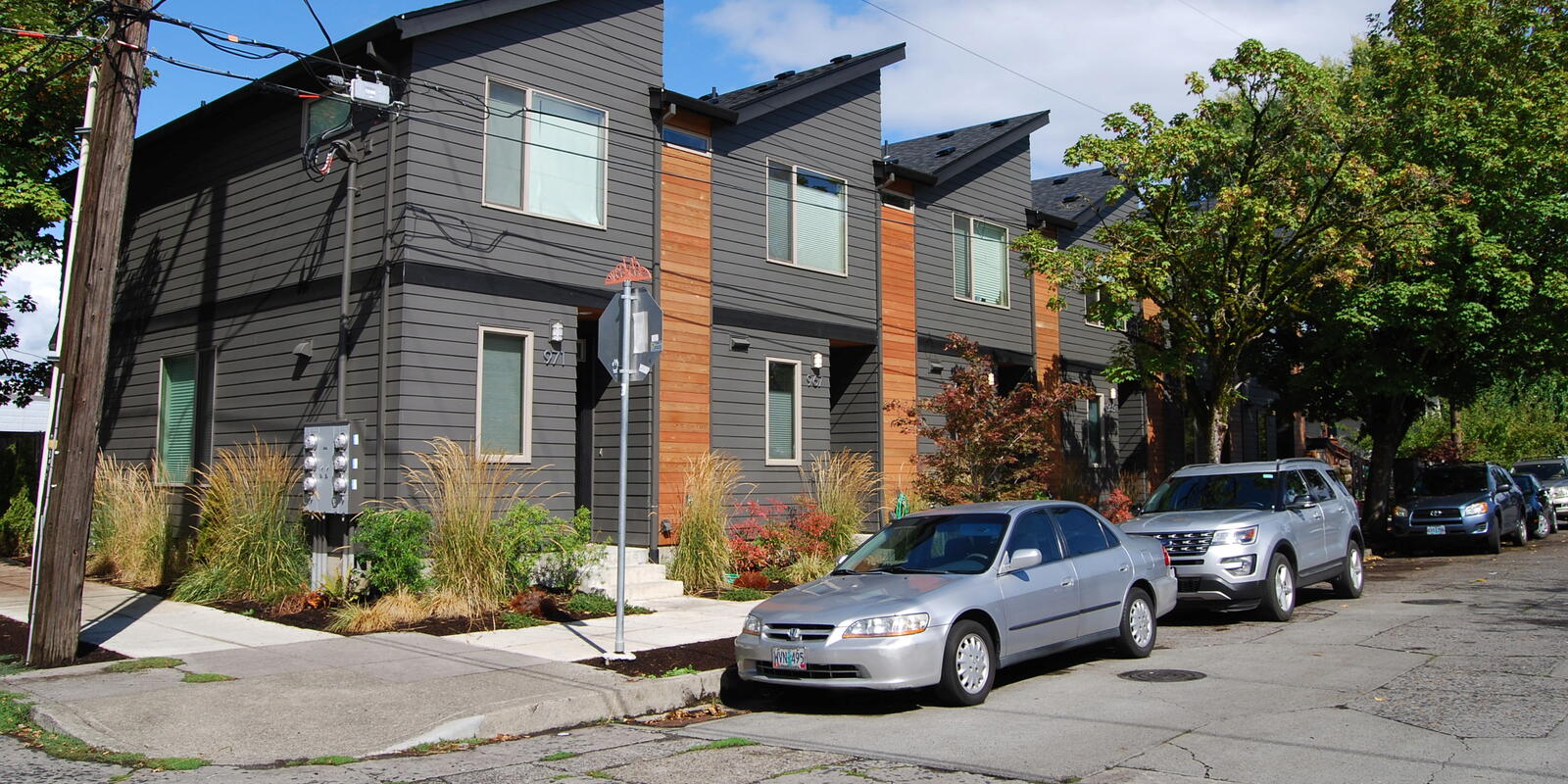
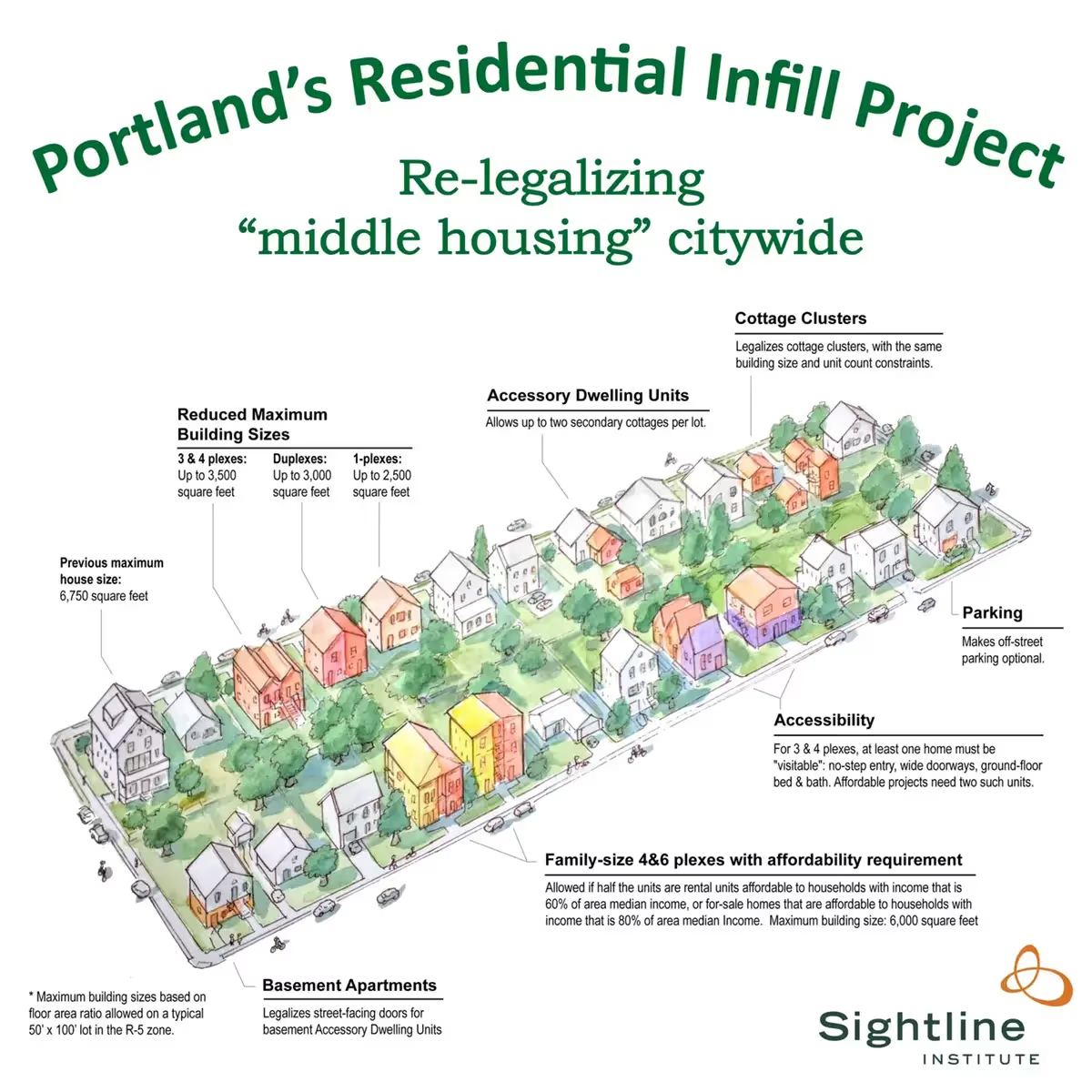
Portland, Oregon enacted a “missing middle” zoning reform that covered the vast majority of its low-density residential areas a few years ago. Oddly, they called it the Residential Infill Project, or “RIP.” It was ambitious and broad, allowing quadplexes, cottage courts, and even multiple ADUs per lot. And it also eliminated off-street parking requirements. To further incentivize multifamily housing, it also scaled the “Floor to Area Ratio” of a building based on the number of homes it had, effectively limiting the size of a detached single-family-home in the affected residential districts.