Buses Need Housing
March 11, 2026
This member commentary post does not necessarily reflect the views of Asheville For All or its members.
This member commentary post does not necessarily reflect the views of Asheville For All or its members.
Last year, Asheville began a study of its bus system that, when boiled down, asks a simple question:
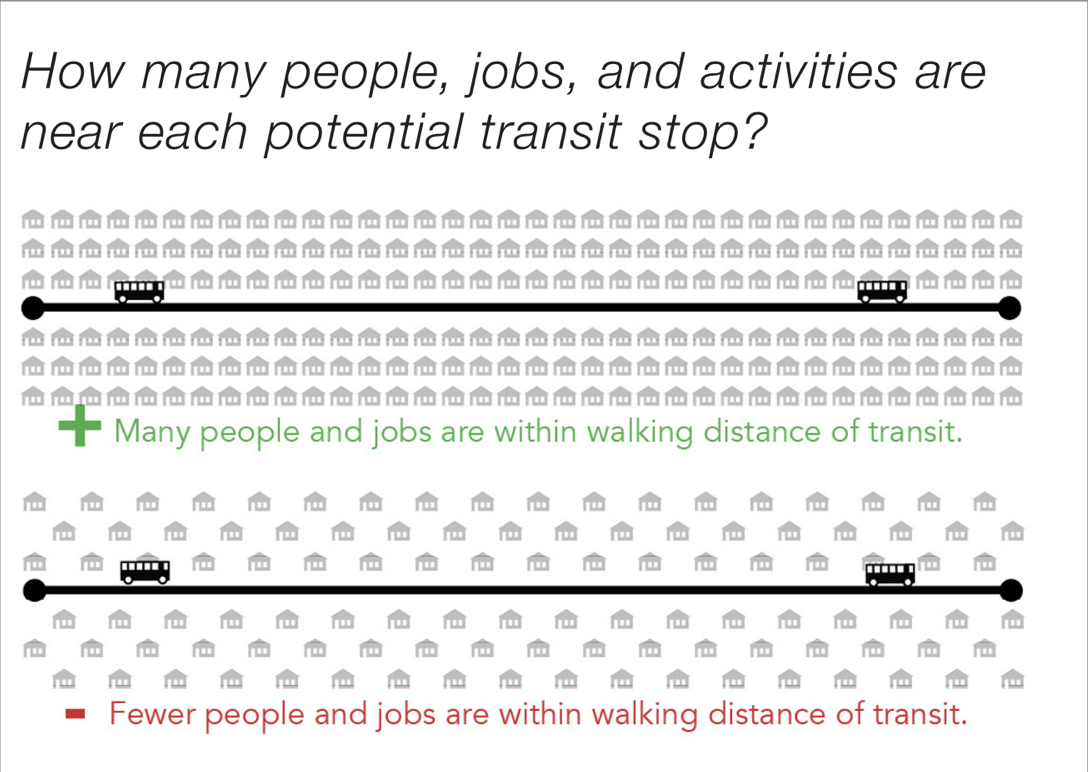
Do we want a sprawling bus network with lots of routes but low frequency? Or do we want a smaller selection of routes, if it means that resources can go to running those routes more frequently?
The study is called the “ART Comprehensive Operational Analysis.” It’s being carried out with the help of some nationally recognized experts on transit, and it is expected to finish up this summer. But if our friend at MountainTrue is correct, it sounds like the city is already leaning towards a revamp of the bus system’s schedules and routes to favor frequency over coverage.
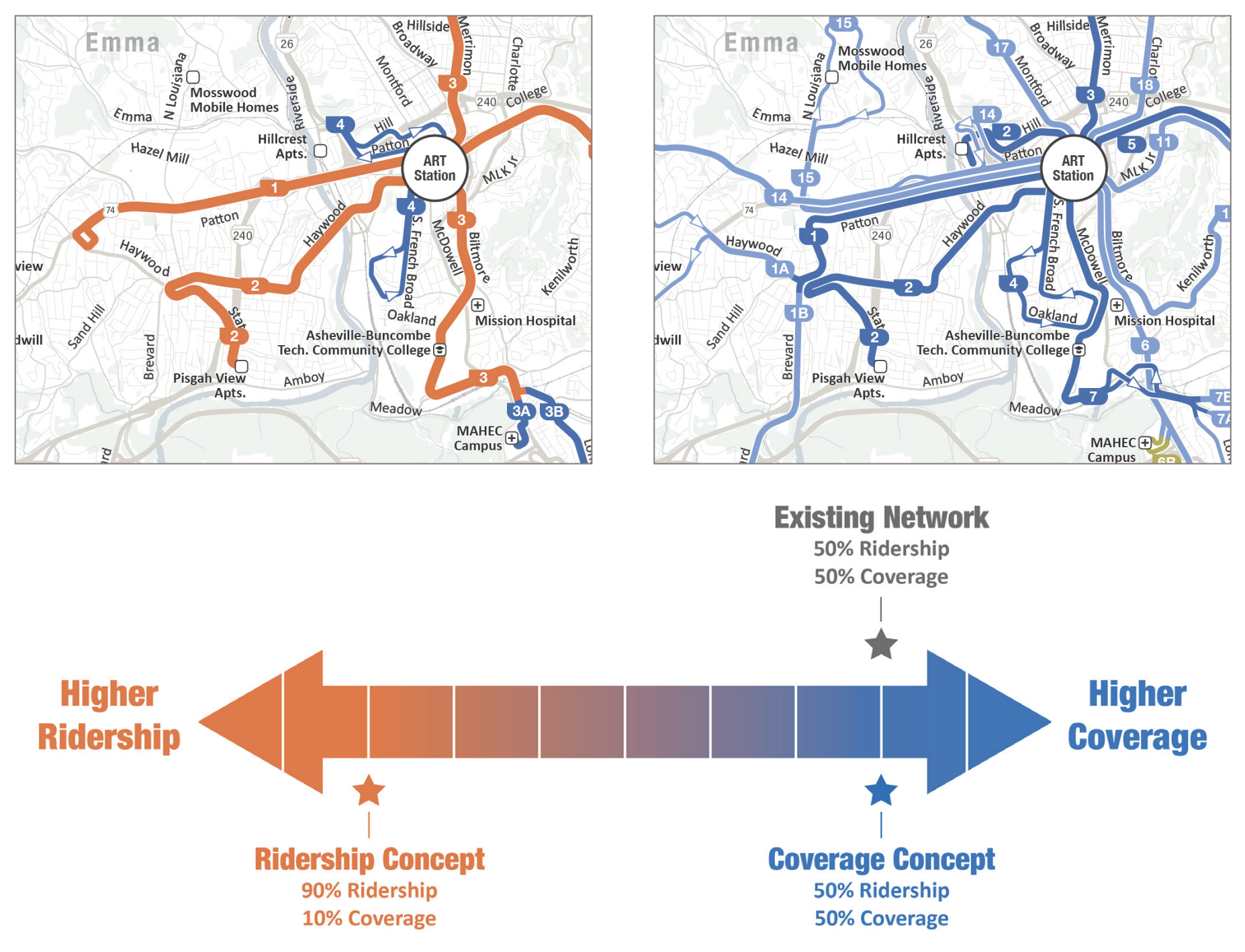
This image from page 17 of the ART Comprehensive Operational Analysis “Concept Report” illustrates the core question at the heart of Asheville’s current Comprehensive Operational Analysis. Given limited resources, do we want a bus system that aims for frequency (or “ridership”), or one that aims for coverage?
I think this is great news. One core assumption of the Comprehensive Operational Analysis, or COA, is that trading coverage for frequency is going to increase “ridership” overall, and it seems to me that this should be a primary goal of any public transit system. In fact, the COA is so certain of this, that its reports name the frequency option as the “ridership model.”
But I think this news also has implications for how we think about housing outcomes in Asheville.
* * *
When I moved to Asheville more than a decade ago, I didn’t have a car. And so my housing search revolved mainly around the questions of “how will I get to work?” and “how will I get my groceries home?”
(The same questions animated my decisions prior to moving of course, which is why I lived in the beautiful, awesome neighborhood of East Lowry Hill in Minneapolis before coming here.)
I lived car-free in Asheville for a year, while I saved up some money. But in that year, unlike when I lived in Minneapolis (or even in Los Angeles!), I never once rode the bus. I just couldn’t wrap my head around going to the store, picking up some groceries, and then potentially sitting around for a half hour (or longer!) waiting for the next bus.
I just walked places, or got rides.
To be sure, I was fortunate back then to find an apartment that I could afford, where I could just walk downtown and to various stores and restaurants and services. With the rise in rents in our core neighborhoods, such options don’t really exist anymore for most working families and young people.