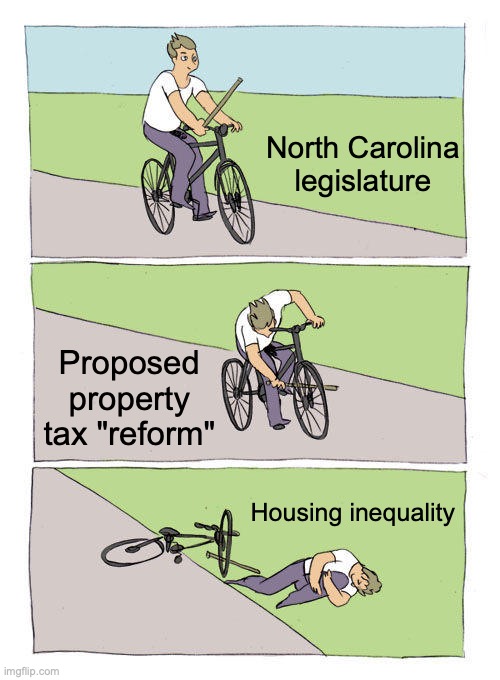
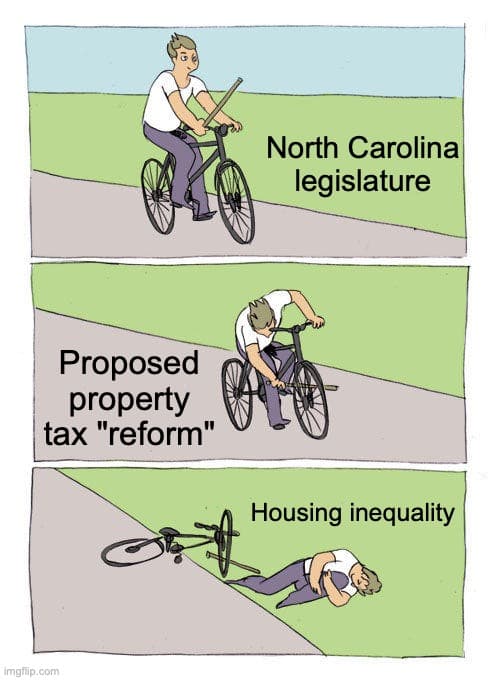
Asheville For All Endorses a “NO” Vote in November on the Property Tax Ballot Referendum
June 2, 2026
June 2, 2026 Updated: September 27, 2026
June 2, 2026 Updated: September 27, 2026
Update: You can now find all of our fall endorsements in one place, our 2026 voter guide.
Asheville For All endorsed three city council candidates this spring. And we will be endorsing a candidate for Asheville mayor soon. (Stay tuned!)
In addition to endorsing candidates for local office, Asheville For All will be asking voters to reject the statewide property tax ballot referendum this November.
Here’s the text that will be added to the North Carolina constitution if the ballot vote passes:
The General Assembly shall enact general laws limiting the amount by which the levy of taxes on property may increase, which may include exceptions.
It may not be clear why this is a housing issue. So here’s why it absolutely is one.
Don’t “Californize” North Carolina
California is a great place to visit, but living there with its property tax situation is an absolute mess. This ballot referendum would open the door to making North Carolina’s rules around property taxes more like those of California.
The language on the ballot in North Carolina is vague, but it says that the state legislature would gain the power to limit property tax increases in the future. Note that it’s not about limiting property taxes per se, and this is what makes us think that the North Carolina legislature is eyeing what’s been done in California.
There, famously in 1978, a reactionary activist named Howard Jarvis convinced California homeowners weary from supply-shock inflation that cutting property taxes would solve their problems. He blamed inflation on the state’s spending on poor and urban schools. And the result is that not only were property tax rates generally capped, but future property tax increases were effectively blocked by preventing home valuations for tax purposes from increasing greater than two percent each year.
Over the last few decades, this has resulted in a state that can’t depend on property taxes to fund public schools and other basic services. As a consequence, cities and counties there (and in other states that have suffered similar “tax revolts”) are more likely to raise money with regressive taxes and fees that exacerbate inequality and hurt working families—especially renters.
What Does This Have to Do with Housing?
Home valuations, and subsequent property tax collections, are in one sense a way that the economy sends out messages, or “signals.”