Policy — Minimum Lot Sizes
March 13, 2024
This is the second entry in our Policy series. Here we discuss what Minimum Lot Sizes are, how they impact housing in Pittsburgh, and why we should abolish them.
This is the second entry in our ongoing Policy series. Pittsburgh is in the midst of a severe housing crisis, with many neighborhoods becoming increasingly out of reach for many families. While the causes for our housing problems today are many, the goal of Pro-Housing Pittsburgh is to advocate for each and every change that can lessen the extent of the crisis. Each entry in this series describes a specific Policy that can be undertaken by the local government to help with the housing crisis in Pittsburgh.
What are Minimum Lot Sizes?
Minimum lot sizes are a requirement in the Zoning Code for the minimum size of a parcel in order to build on it. If a property in the city is too small, you cannot build a residential unit (houses or apartments) on it. Additionally, if you want to build more than one home, there needs to be a certain amount of land per unit. When we look at Pittsburgh in particular, our city has truly expansive lot size requirements. Let’s start by taking a look at the most restrictive zoning district: Very Low Density Residential or “VL”. A parcel of land in a VL district needs at least 8,000 square feet to allow a house to be built. That’s nearly a fifth of an acre, equivalent to two full basketball courts, to build one house. On the other end, a Very High Density Residential district or “VH” requires a minimum lot of 1200 square feet. To put these numbers in context, a large single family home in the city can be built on only 900-1000 square feet and a bungalow or row house could fit on a much smaller lot, to say nothing of alternative housing such as tiny homes.
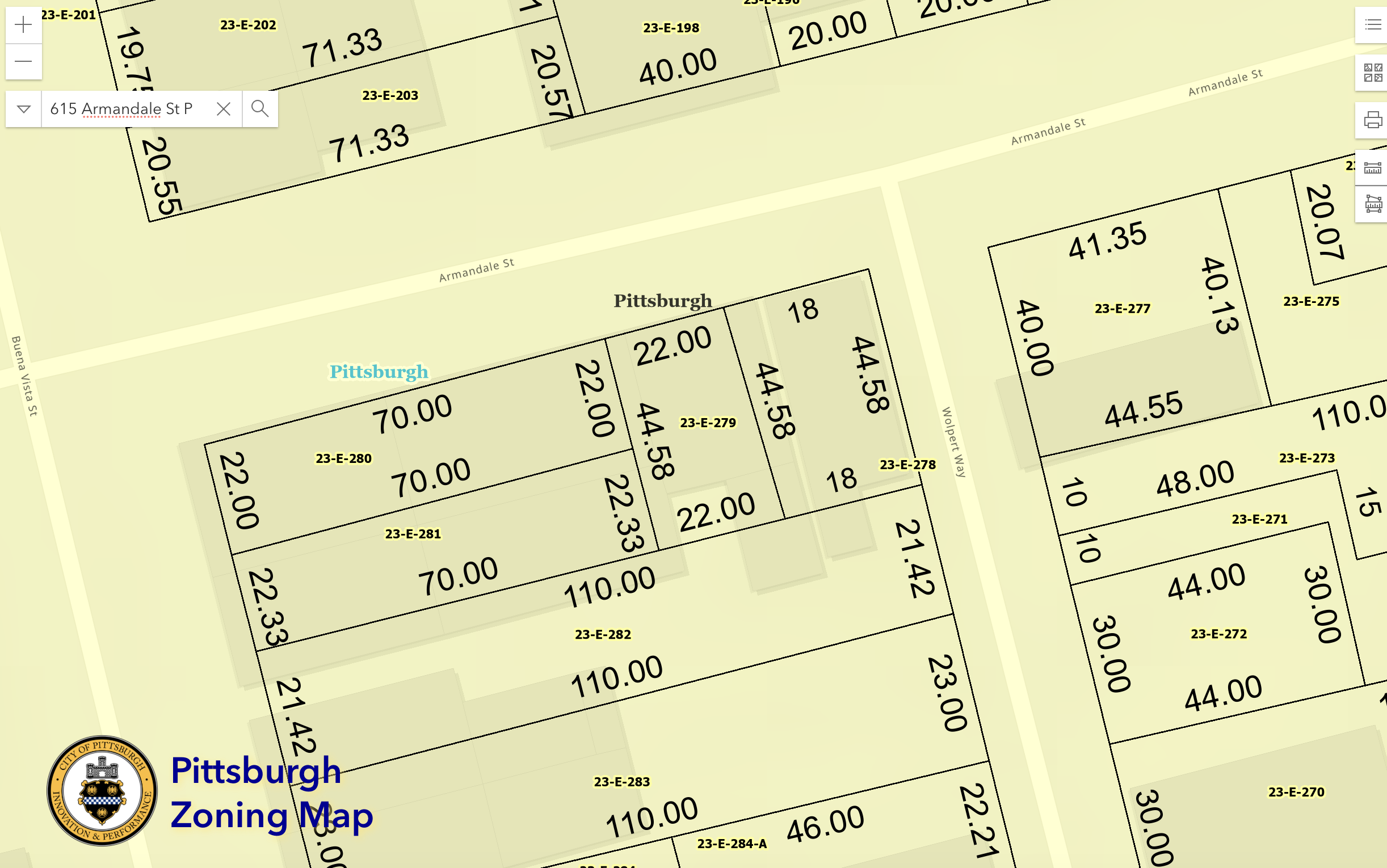
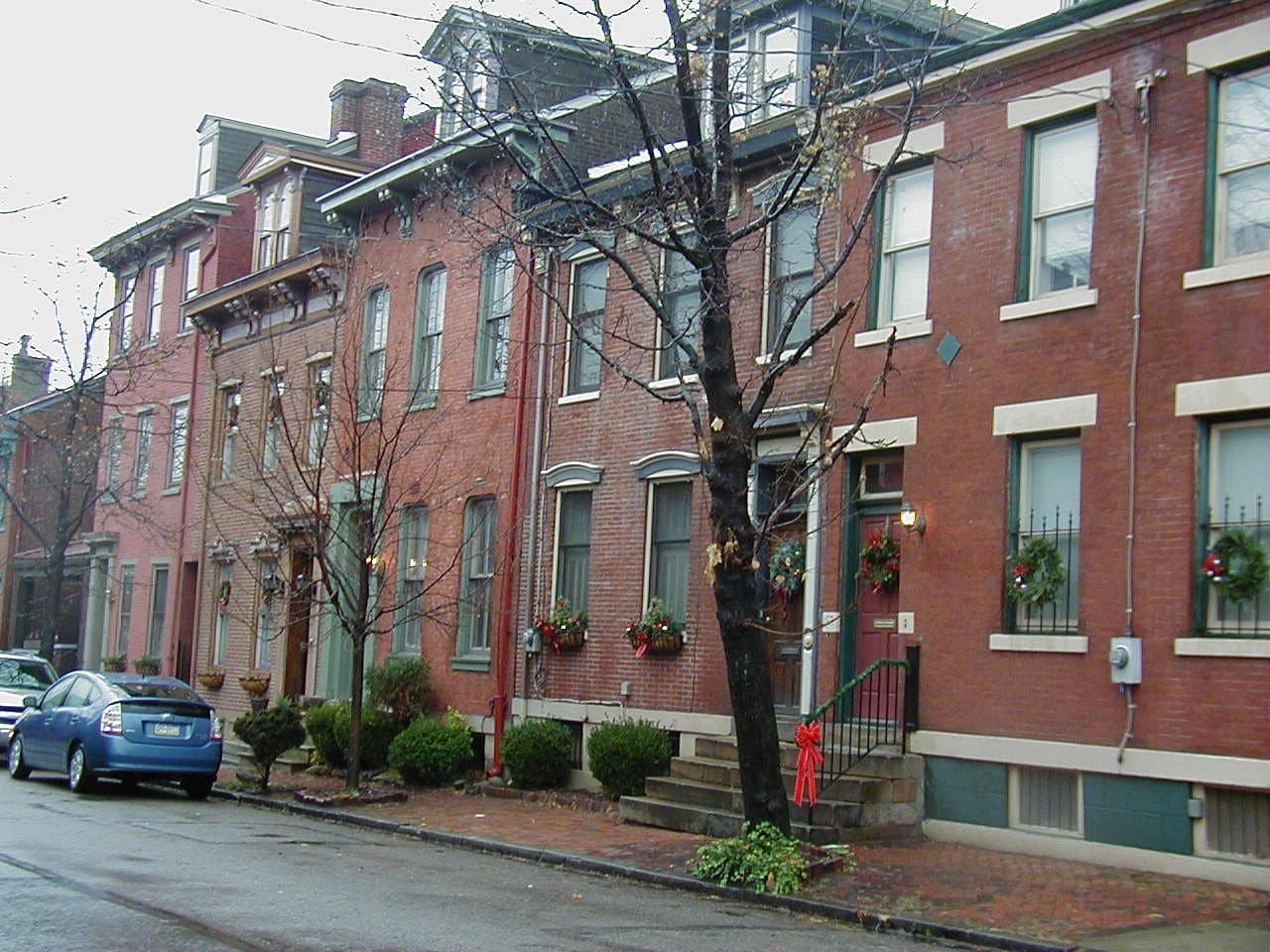
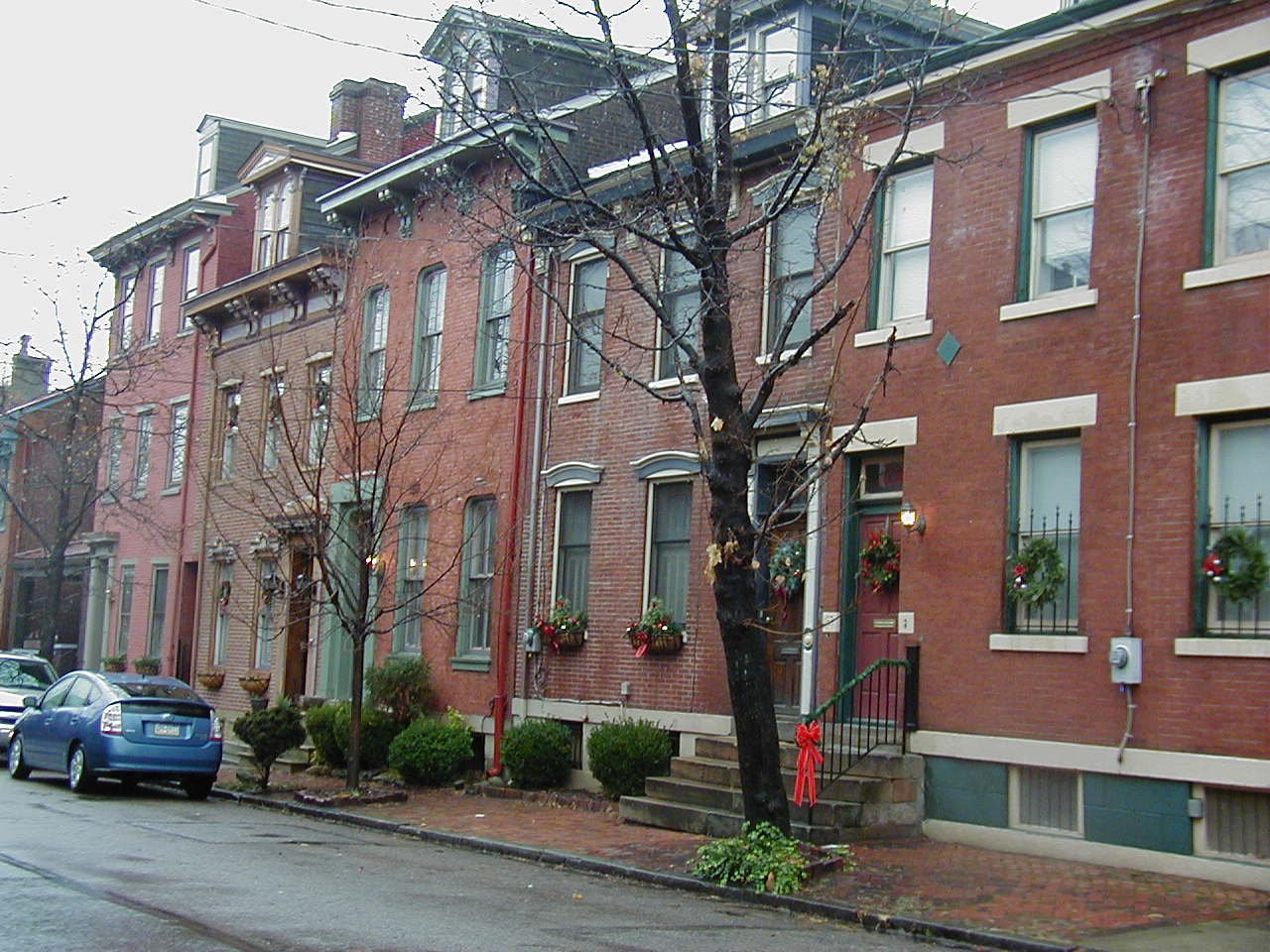
These large lot size requirements make even less sense when looking at the existing and historical housing stock of the city. For example, 615 Armandale St, on parcel 23-E-279 in Central Northside (in the Mexican War Streets) is 968 square feet, smaller than the minimum lot size even in a Very High Density district. The rowhouse that stands there today was built in 1900.
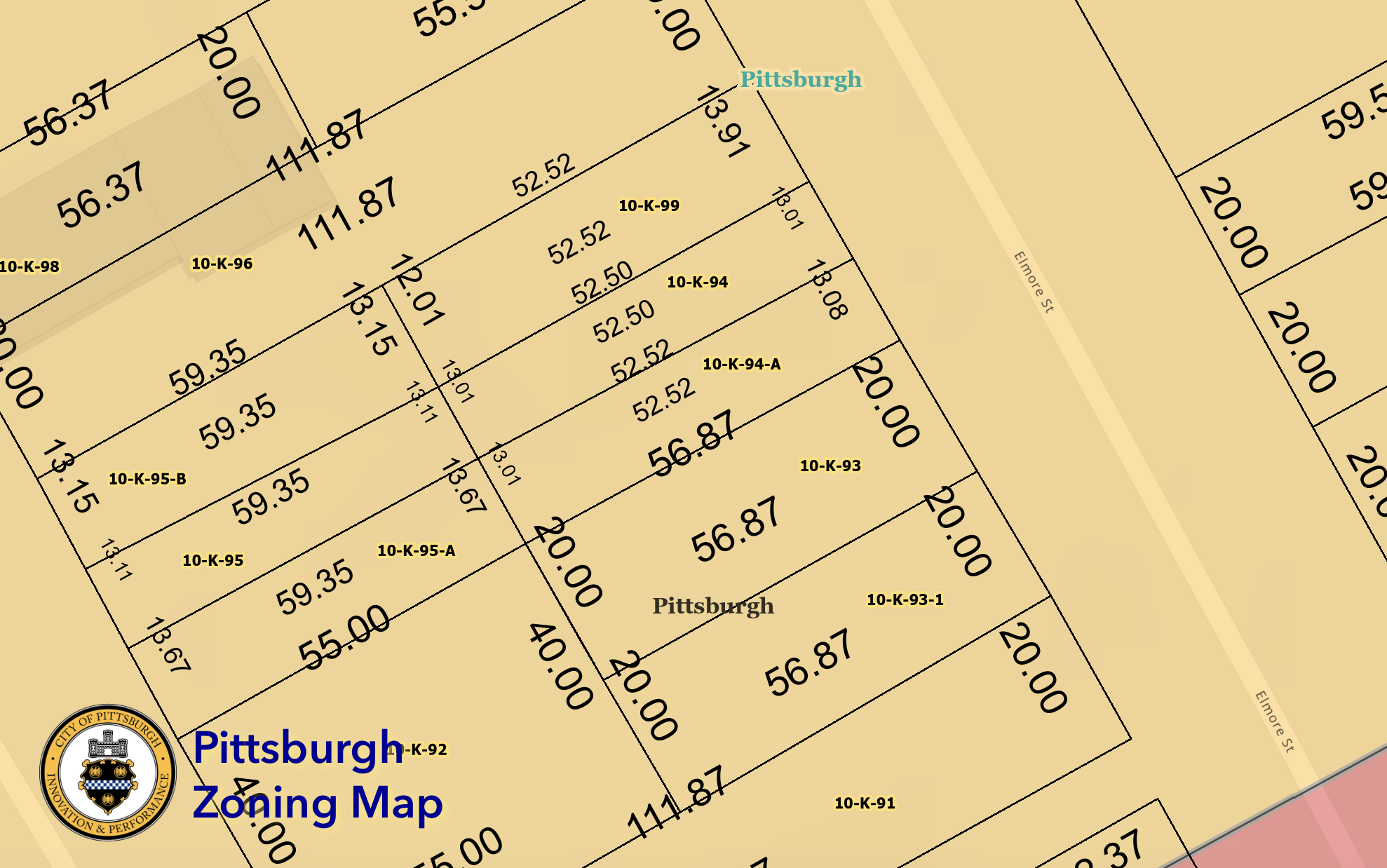
Another example is this empty lot on Elmore St, which is parcel 10-K-94 in the Hill District. It is now an empty lot, a mere 683 square feet, but it used to have a house. Because of minimum lot sizes, it can no longer be built on and put to productive use. Instead of providing housing and tax revenue, the lot is now owned and maintained by the city, an unnecessary drain on city finances. A house existed there as early as 1882 and one was still there in a 1993 aerial photograph.
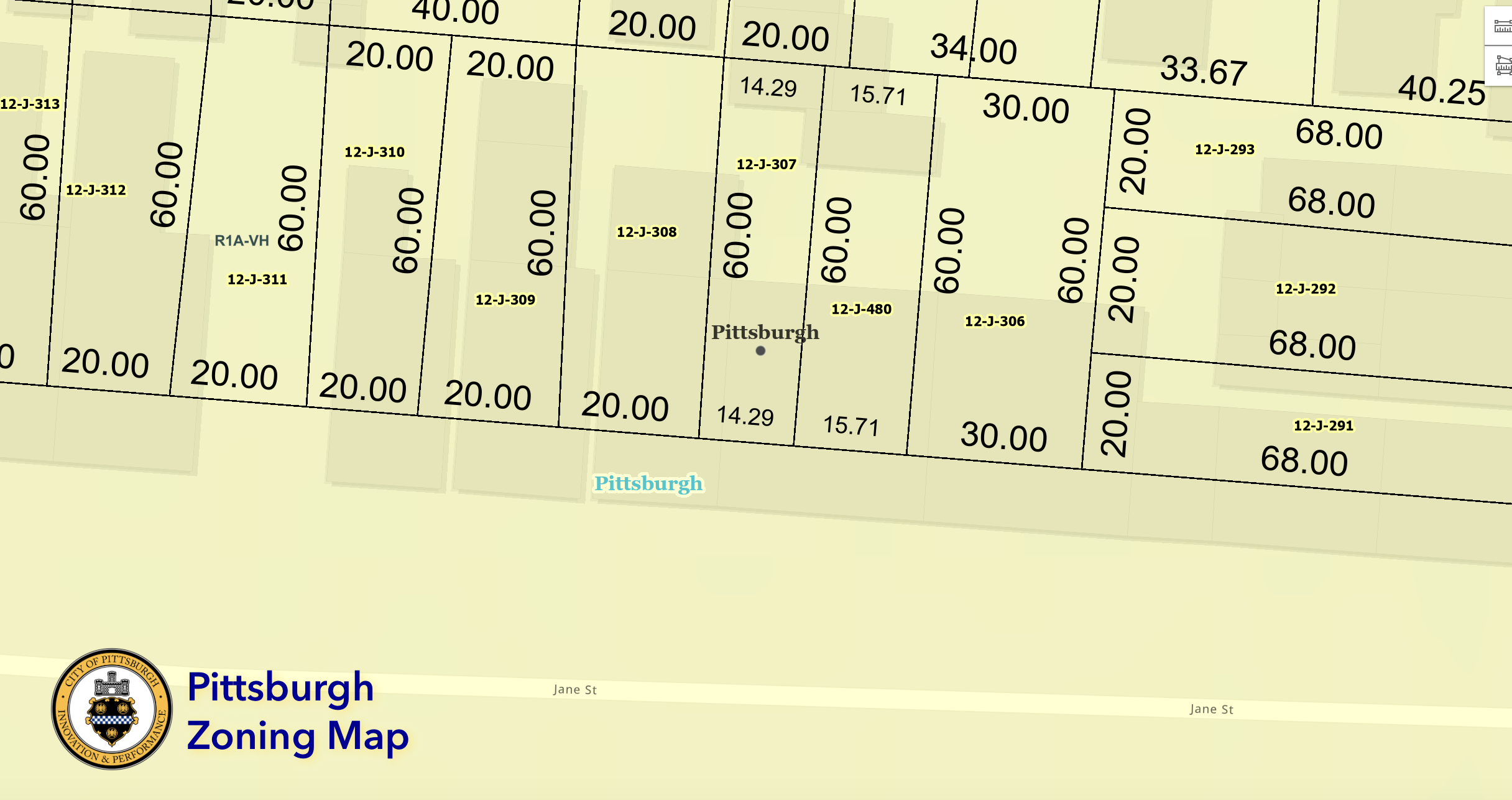
A third example is 1821 Jane St, on parcel 12-J-307 in the South Side Flats, which is also a rowhouse. The lot is 857 square feet. The house was built in 1895. Under the current zoning code, due to minimum lot sizes, it could not be built today.
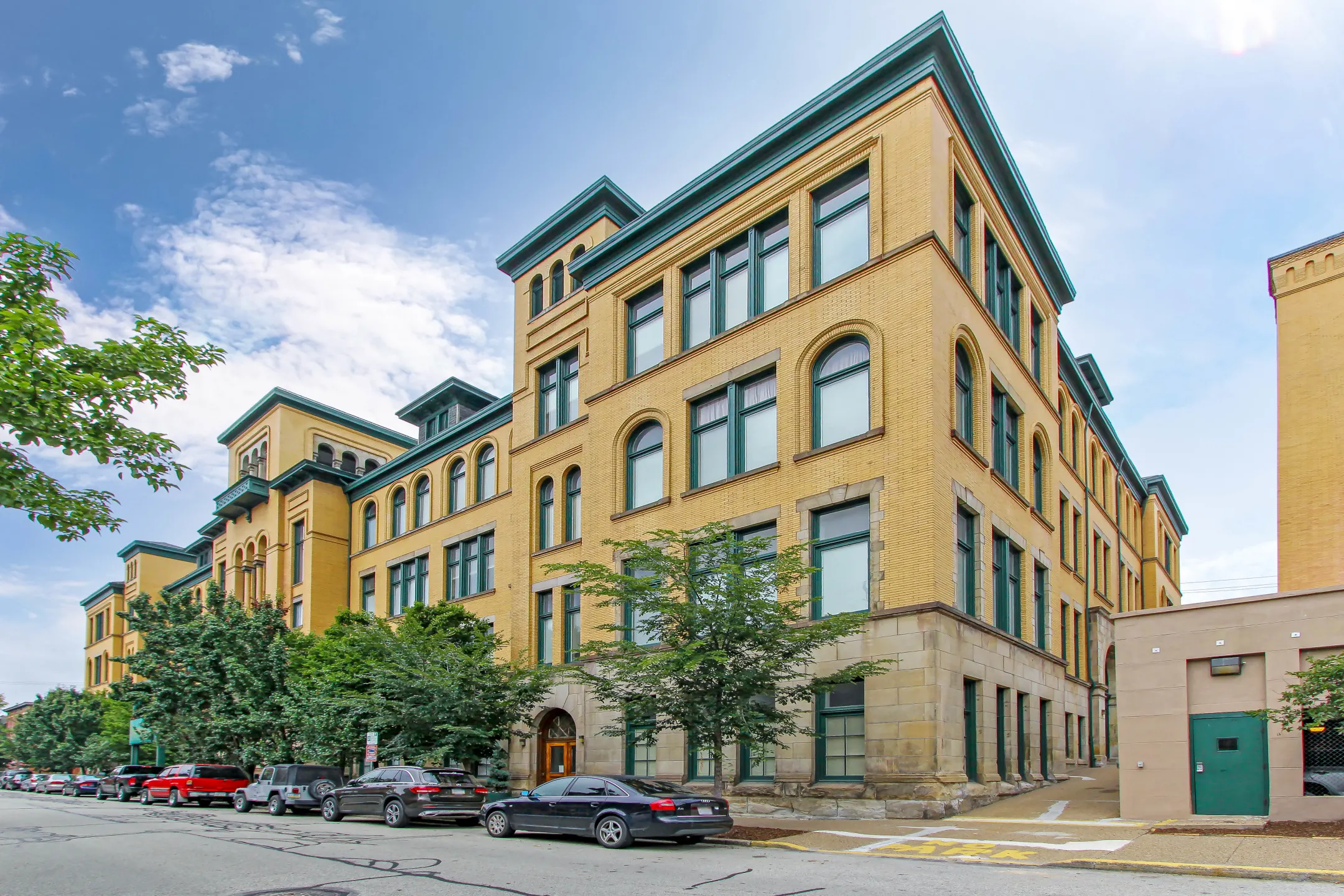
The School House Apartments: 77 housing units on a lot that could only be zoned for 40 housing units under the current zoning code.
Minimum lot sizes not only affect townhouses. The minimum lot size per unit also prevents crucial missing middle style apartment buildings from being built. From our “You Can’t Build that Here!” series, we have shown examples of how minimum lot sizes per unit would have prevented multiple existing buildings from being built, including The School House Apartments, The Eaglemoor, 732 S. Millvale, and Woodlawn Apartments.
How do Minimum Lot Sizes Affect Us in Pittsburgh?
So how much housing does minimum lot sizes take off the table? To know that, we can turn to Pittsburgh’s own housing needs assessment. The numbers are clear: for most residential areas more than half of the several thousand residential lots in the city cannot support any home construction at all due to minimum lot sizes. In addition, for lots which permit more than one home to be constructed, minimum lot sizes prevent 70-80% of the lots from building at least 4 units. Now it may be physically impossible to build one or more units on some properties. But minimum lot size does not deal with engineering challenges, it is a blanket ban on housing in many parcels of our city, unless a burdensome exemption is sought (and often denied).
This may feel like a strange problem to those who walk down the long stretches of small row houses that cover our city. There’s plenty of housing that doesn’t reflect these restrictive rules. How were they built? If you’ve been reading any of our “You Can’t Build that Here!” blog posts, you already know the answer to this question: they got built before the rules existed. Like many other cities, we slammed the door on building more neighborhoods like them. But rules can be changed!
A pile of zoning code violations. Popularity? Through the roof. Credit: Ainulindale, Wikimedia Foundation
Suggested Policy
Our position on minimum lot sizes is straightforward: get rid of them or reduce them substantially. Pittsburgh was built from the ground up on lots the size of postage stamps and these neighborhoods now have some of the most desirable homes in the entire city. Minimum lot sizes were written to achieve goals that are so clearly at odds with the values of our city, they encourage automobile dependency and they continue to drive out existing residents when not enough homes are built and prices shoot skyward. While we don’t view removing minimum lot sizes as a silver bullet, we do believe they are an important part of a broader series of reforms to help improve housing access and affordability in the city.
So how does this rule get changed? By an act of the city council. If you want to help get this changed make sure to contact your local council member to demand its removal, and if you want to engage with housing more broadly, please feel free to reach out and work with us on building affordable, abundant housing in Pittsburgh!
Resources:
Urban Minimum Lot Sizes: Their Background, Effects, and Avenues to Reform
Lot Sizes: When the Bare Minimum is Way Too Much - California YIMBY (cayimby.org)