
A Family Wanted to Rebuild. Neighbors Tried to Landmark 400 Homes.
June 6, 2026
A single home rebuild in San Mateo's Baywood sparked a years-long push to landmark 400 houses as historic — costing taxpayers ~$500K amid a $14M deficit.
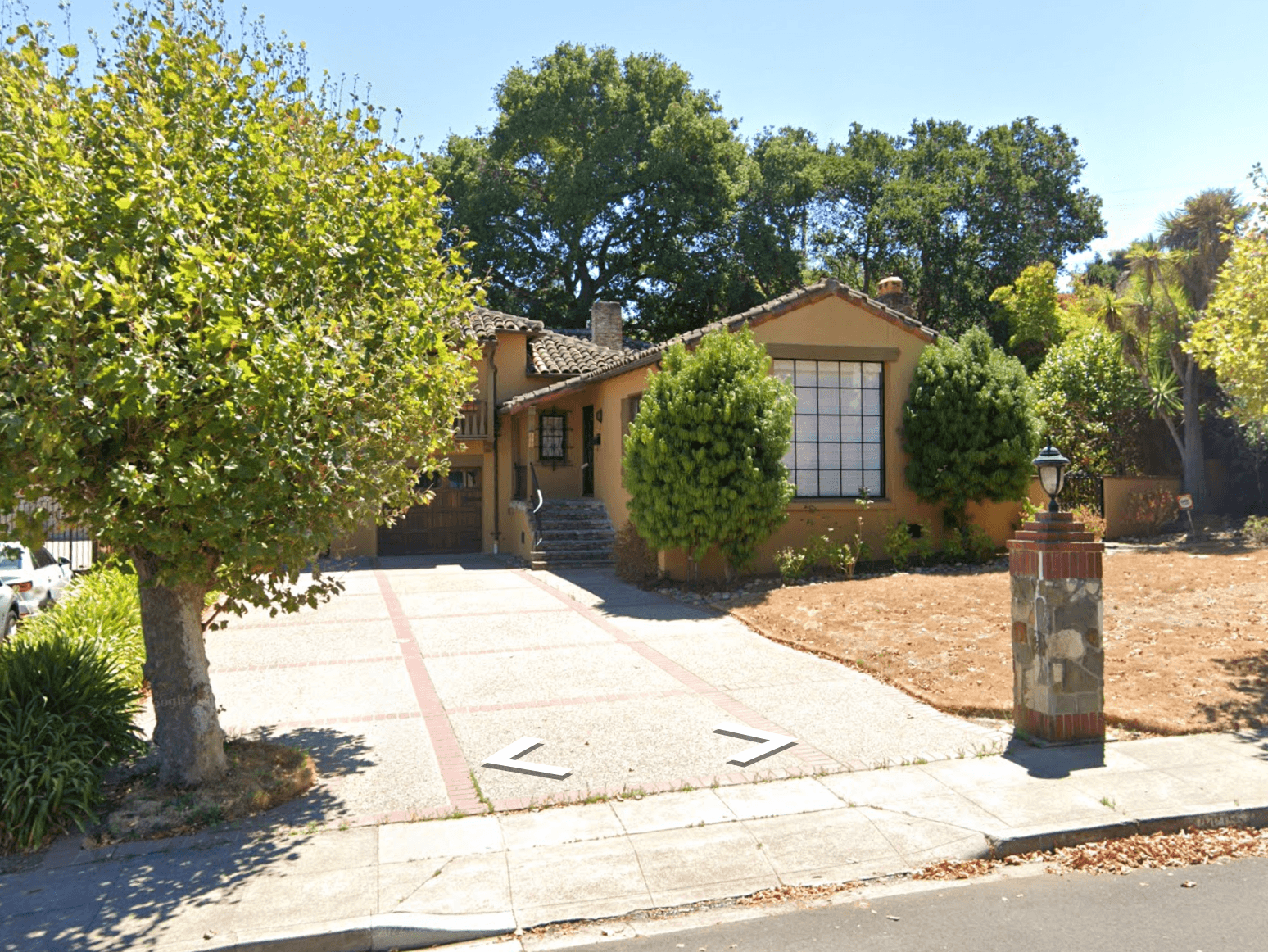
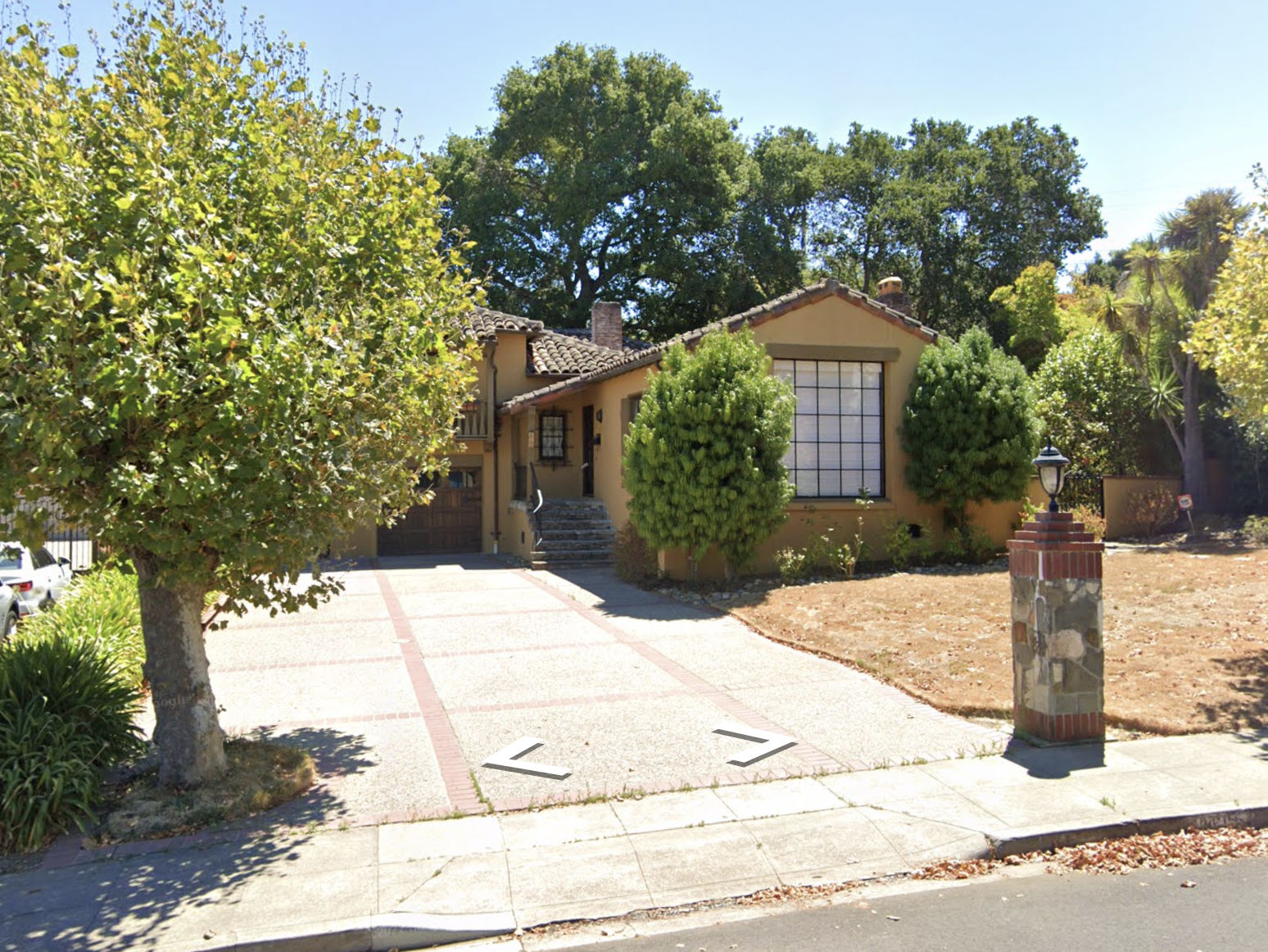
In 2021, the Alston family bought a house at 415 Fairfax Avenue in Baywood. It was old — built in 1933 — and once they moved in they found the problems that come with old houses. Fixing it would have cost a fortune and dragged on for years. Tearing it down and starting fresh was cheaper and faster, so they planned a larger home with an accessory dwelling unit for his mother-in-law. First the city made them sit through a review to decide whether their 90-year-old house was historic. It wasn't.
What that triggered has cost San Mateo taxpayers something like half a million dollars — and that figure doesn't include what the Alstons themselves spent to defend the right to live in their own house.
A well-funded campaign
Once the Alstons' plans became public, a group of neighbors set out to stop them. The effort was led by the Baywood Neighborhood Association (BNA) — the homeowners' group in one of San Mateo's most affluent neighborhoods. At the time it was run by Mike Nash, the Alstons' next-door neighbor, as president, with his wife Lisa Diaz-Nash as vice president.
This was not a letter-writing campaign. BNA spent its members' dues to pay a preservation architect to assemble a report declaring that the city was wrong and that the Alstons' unremarkable home was in fact historic. They also retained land-use attorneys to argue that tearing down one house required a full environmental review under CEQA. A month before the project reached the Planning Commission, a second group — the "San Mateo Heritage Alliance" — filed its incorporation papers with Mike Nash on its board.
The Alstons, who are Black and Korean and had lived on the Peninsula for decades, said the campaign made them feel unwelcome in their new neighborhood.
The city approved the project in 2022 regardless. The opposition's one win was cosmetic — they got the new house redesigned to suit their taste. In July 2022 the Planning Commission looked at the rebuild and found nothing to deny: the neighborhood wasn't a historic district, the plans met every standard, and state law tied the city's hands.
The old house came down that year, being replaced with a new bigger house and an ADU. This is exactly the type of infill development that increases the local property tax base and that California has been endeavoring to make easier to build over the past decade.
Losing wasn't enough
When the house was demolished it did not end the campaign.
In November 2023 the Heritage Alliance went to California's State Historical Resources Commission and applied to designate all of Baywood — 350 to 444 homes, depending where you draw the line — as a single historic district. The application flatly stated that a historic district would shield the neighborhood from SB 9, the state law that lets owners split a lot or add units. The pitch to neighbors was to landmark the entire neighborhood or else the house next door might become a fourplex.
Almost none of Baywood's homeowners had asked to have their home made historic. Many learned of it only when yard signs started appearing — bright yellow "No Baywood Historic District" placards up and down the blocks.
By the time the campaign reached the state, Lisa Diaz-Nash had moved from the association's vice presidency to the council dais — elected to represent Baywood's District 1 in November 2022, while the BNA effort she had helped lead was still underway. (Author's note: I am a resident of District 1.) She promised to recuse herself from the Baywood question, and on the nomination itself she did. But the recusal had limits. In March 2024, when residents asked the council to simply let the 444 affected homeowners vote on whether they wanted any of this, she was one of three members who blocked it from advancing — a vote that broke her husband's way. She also submitted a letter to the state's Office of Historic Preservation in support of the district.
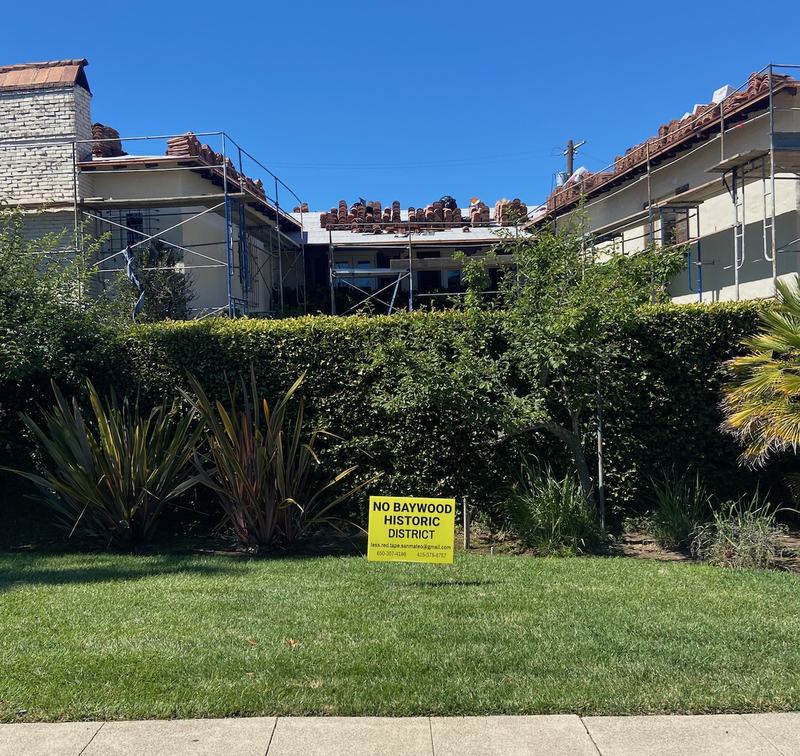
A clear majority of Baywood's homeowners were in fact irate. By late 2024, more than half of the affected owners had mailed objections to the state's Office of Historic Preservation. But a majority doing so does not stop a designation. Owner objections can keep a district off the formal registry, but the state can still designate it — and every restriction that comes with historic status would still apply. The application has not been denied. It sits with the state today, on hold while the city writes its own ordinance and the Heritage Alliance corrects noted errors that were flagged in its application. The threat that started all this is merely paused.
The bill comes due anyway
The district application is still unresolved — and the city has opened its checkbook and devoted staffing in response to it.
In June 2025 the City Council told staff to draft a complete rewrite of the city's historic preservation ordinance and produce a citywide survey of historic resources, and set aside about $330k of public money to hire a consulting firm to do it. Add staff time and the real number runs closer to $500k. Then, in early 2026, the council created a permanent Historic Preservation Commission to handle a few applications a year that the existing Planning Commission (budgeted at $50,400 annually) already managed.
The City of San Mateo faces a $14 million budget shortfall this year and a structural gap of $12-$14 million a year going forward. The city has frozen eight positions, told every department to find cuts, and is asking voters for a sales tax hike in November 2026 to bring in about $7 million a year.
A playbook
None of this is unique to San Mateo. The same move is playing out right now in Berkeley's Elmwood neighborhood. The city of Berkeley wants to allow taller buildings along College, Solano, and North Shattuck — a state requirement in high-resource neighborhoods to address historical inequities. Opponents answered by trying to brand the Elmwood shopping strip a historic district which would make building housing there far harder.
Preservation is a legitimate tool. Some buildings genuinely deserve protection. But when the trigger is always a housing proposal and the boundary always lands exactly on the parcels someone wants frozen it stops being preservation and becomes zoning by other means — a veto on new neighbors. And the public pays for it twice: once in the homes that never get built, and again in the consulting invoices.
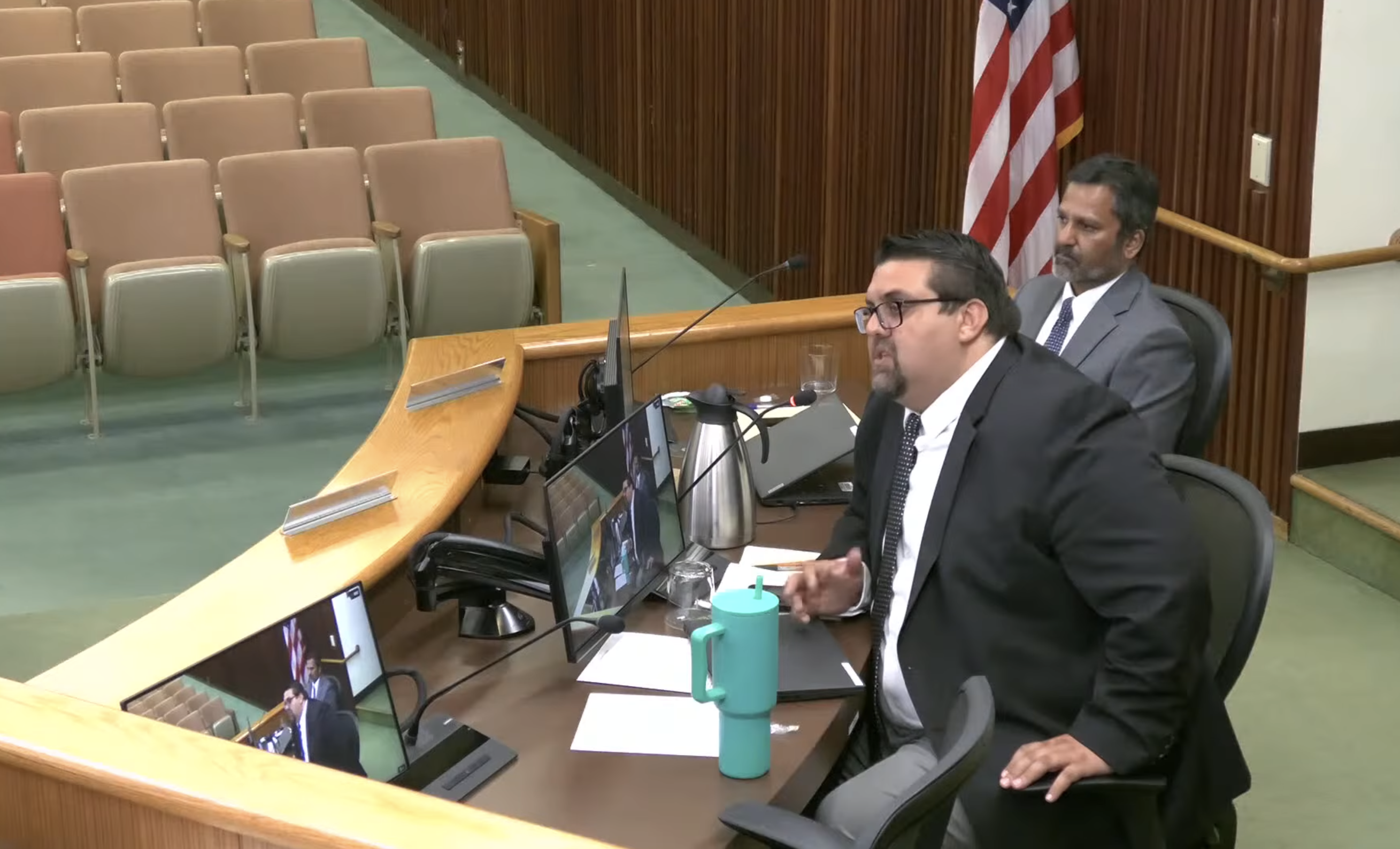
San Mateo's City Manager Alex Khojikian named the cost himself at a recent council meeting — describing the downtown improvement plans the city has had to shelve in favor of historic policy writing:
"As part of the downtown plan that's one of the areas that we wanna focus on, but the downtown plan has been delayed a little bit by our historic uh work & initiatives but hopefully we'll get to that in the future so that we can focus on our city-owned parcels in our downtown and look at highest and best use strategies overall."
Baywood's residents objected overwhelmingly, and it wasn't enough to stop the state — the application still sits at the Office of Historic Preservation, on hold, not dead.
The next time a housing proposal triggers a sudden case for historic status — and it will — name it, and show up: email your councilmember, speak at the meeting, and tell the city to build the downtown housing it just admitted it shelved.
Preservation should protect what's truly irreplaceable. It shouldn't be the tool a few well-funded neighbors use to decide who gets to live here next.
Previous press coverage:
- "‘Historic’ NIMBY playbook hits Bay Area, and could affect new housing throughout the region" San Francisco Chronicle, Nov. 15, 2023
- "What makes a Bay Area property ‘historic’? The answer is anything but straightforward" San Jose Mercury News, Dec. 5, 2023