
Mind the Middle: The Key to Denver’s Housing Future Lies Just Outside Downtown
August 6, 2025
Denver's housing future depends on building more homes in the walkable neighborhoods just outside downtown. Learn how zoning reform can ease traffic, reduce costs, and make Denver more livable.
We at YIMBY Denver are here because we love Denver. It’s a special place, shaped by generations of people who loved it before us. That includes people who moved here recently, just as your ancestors may have done. Colorado has long been a state of newcomers and opportunity seekers. The sunshine, the Rockies, and green chile-smothered breakfast burritos aren’t losing their charm anytime soon.
So the question isn’t if people will continue to move here. It’s: how and where will they live?
Denver’s Past Choices Shape Our Current Frustrations
Every Denverite knows the symptoms: traffic, long commutes, rising rents, and few alternatives to driving. These aren’t personal failings; they’re the outcome of policy decisions that have shaped where homes can be built, often forcing new development far from the city’s core.
A recent report from the Terner Center traces these patterns back to the 1940s. For decades, zoning rules pushed new homes to the edges of the metro. And now our highways are clogged, our air is dirtier, and we’re spending more time (and money) getting where we need to go.
New Data Shows Promise — But Also a Clear Warning
We looked at three major recent reports to assess how Denver is doing:
- Terner Center VMT Scorecard: Are we building in areas where people can walk, bike, or take transit? Denver’s performance is better than many peers, but it’s not yet enough to reduce Vehicle Miles Traveled (VMT), a key indicator of how much people must drive to get through daily life.
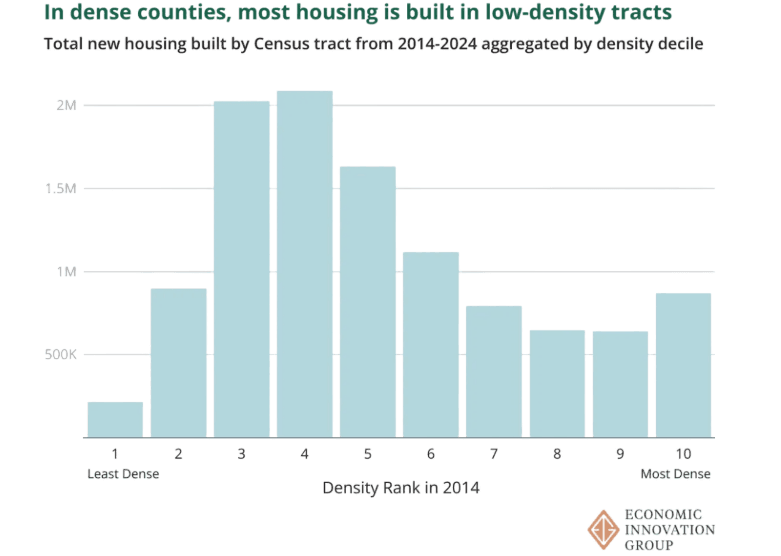
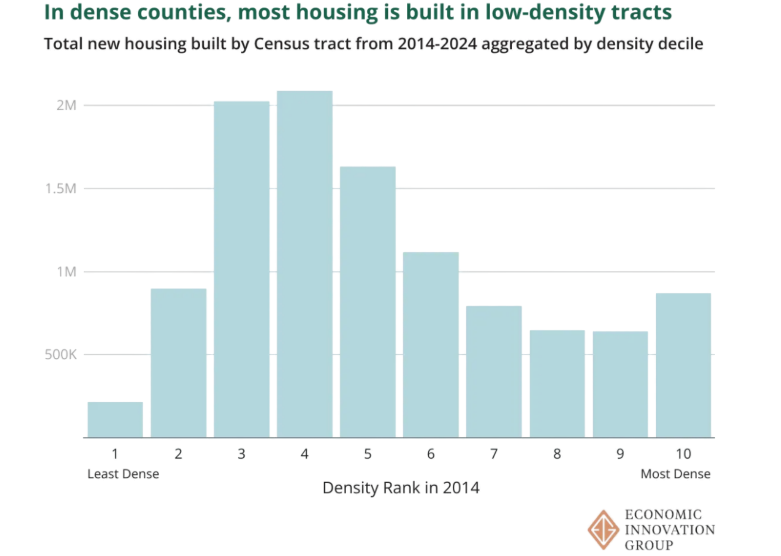
- EIG Report: Denver's growth is polarized: either in downtown or in far-flung exurbs. That leaves a huge gap in the “Missing Middle” neighborhoods — the connected areas just outside downtown that could house more people with less disruption.
- Zoning Atlas: 70% of Colorado land zoned for housing bans the most affordable housing types. That means sprawl isn’t just a market failure — it’s often the only legal option.
We’re building some housing in the right places, but not nearly enough. Meanwhile, many neighborhoods closer to the city’s core remain effectively off-limits to growth, driving up costs and traffic across the region.
The Spatial “Missing Middle”
We often talk about the “Missing Middle” in terms of housing types: duplexes, triplexes, ADUs, etc. But there's also a spatial Missing Middle: the walkable, transit-connected neighborhoods between downtown and the distant suburbs.
These areas are already well-served by infrastructure, jobs, and amenities. Allowing more homes here could ease pressure on both the city’s core and its edges, without the infrastructure and environmental costs of sprawl.
But outdated zoning continues to block new homes in exactly these neighborhoods. Instead of saying "no" to change, these areas should be leading the way toward a more functional, affordable Denver.
What Can You Do?
Denver is moving in the right direction, but we’re not there yet. We need to keep up the pressure.
📣 Tell your city and state representatives you support housing-forward initiatives like:
✅ Thank the lawmakers already working for housing abundance.
✅ Share this post with your networks.
✅ Show up for hearings, meetings, and testimonies; they work!
Why It Matters
Colorado is 105,000 homes short of a stable housing market. We're fifth in the nation for home prices and third for rent. If we want a Denver that’s affordable, livable, and sustainable, we need to build more homes in the places where they’ll do the most good, not just where they’re easiest to permit.
The good news? We can change this — and we already are.
The bad news? We have no time to waste.