
Shaping 5 Bloomington Neighborhoods
August 1, 2024
(Opinion by Matt Gleason): 5 important places in Bloomington could be the centers of their own neighborhoods
More than just Downtown
Bloomington has a lively and growing downtown, with high housing growth and even higher housing demand. Along with downtown, there are many employment and retail centers, parks, and schools that people need to commute to often, causing lots of intra-city traffic. Redeveloping a few of these areas into walkable neighborhood centers could give people who want to live and work in Bloomington a variety of options. Completing them with daily necessities like groceries, childcare, and healthcare could greatly reduce traffic and its related inequalities within the city.
College Mall, Eastland Plaza, and Whitehall Plaza
These areas are already zoned for high density mixed-use development characteristic of a downtown area, but roadblocks to development including height limits and parking mandates in the UDO hold them back. They are currently occupied by more surface parking lots than space for the businesses and restaurants those parking lots serve. By removing these roadblocks, the city could allow these shopping centers to become vibrant neighborhoods that house and employ people within walking distance of existing grocery stores, shops, and restaurants. This could be improved by adding an east-west shared-use trail similar to the B-Line that connects these new neighborhoods to each other, Ivy tech, the B-Line, downtown, and IU campus. These areas are already well-connected by bus service, so allowing them to fill in with housing would increase ridership and the effectiveness of our transit system. Redevelopment would also create the opportunity to add more trees, biodiversity, and park space to the area, reducing flash flooding risks. Other cities are undertaking similar cost-effective mall redevelopment projects, like the Northgate Mall redevelopment in San Rafael.
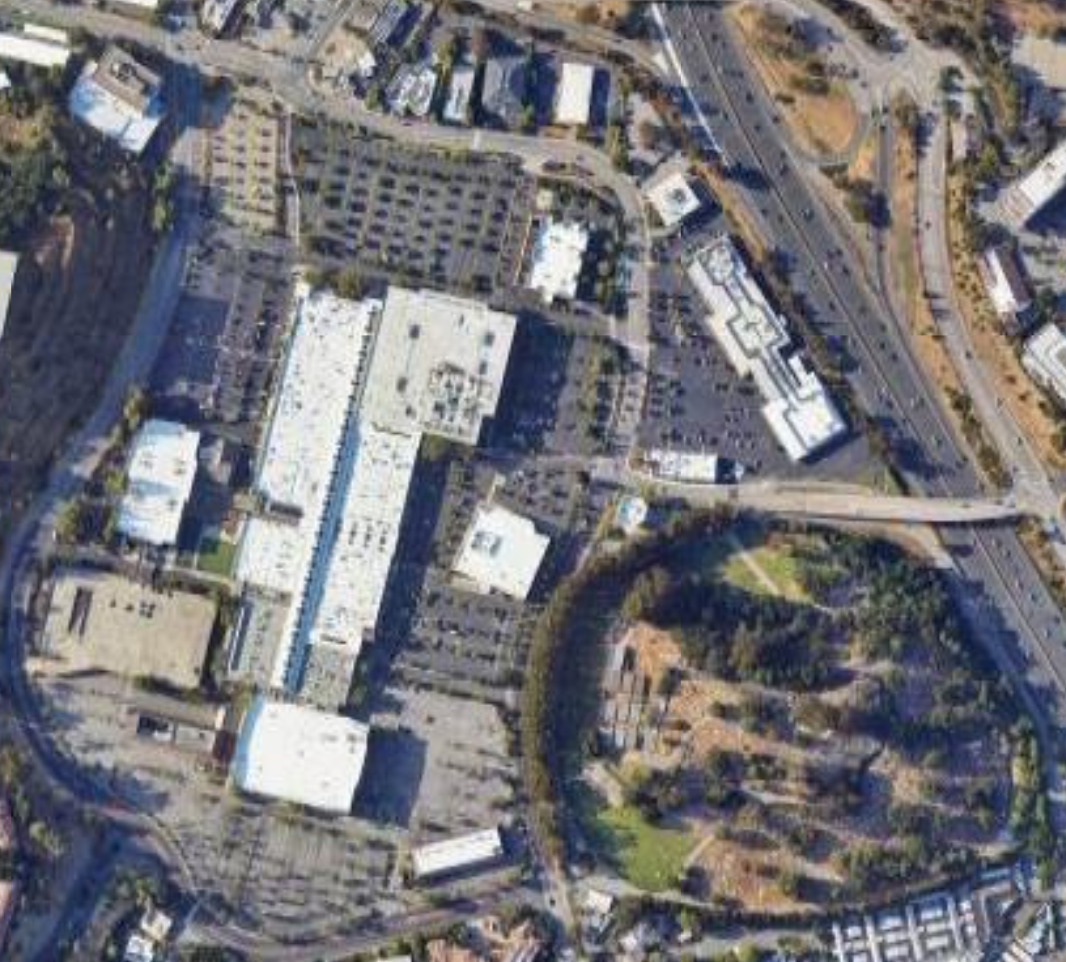
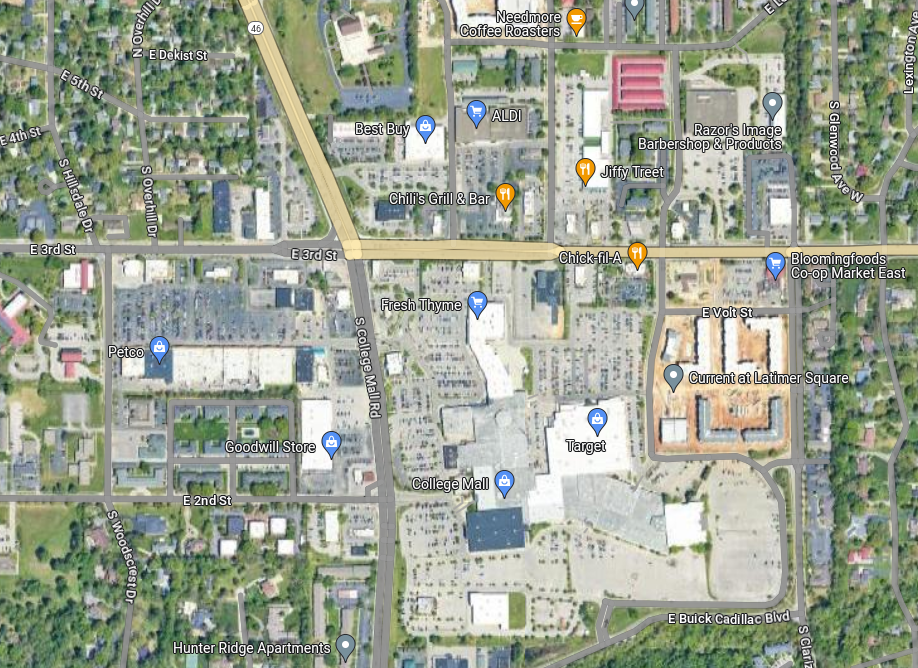
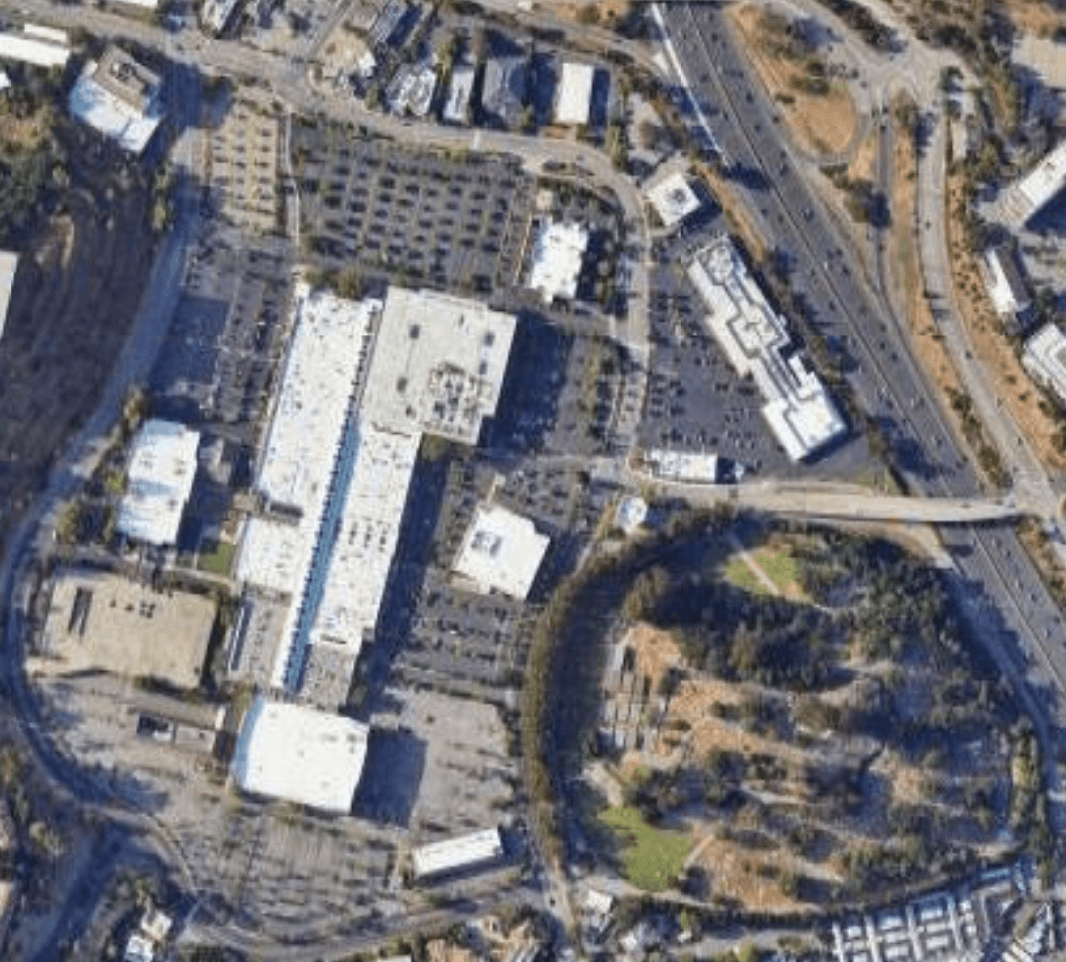
Above are Northgate Mall on the left, College Mall and Eastland Plaza on the right for comparison. Short of removing all parking, a couple well-placed parking garages could easily satisfy any remaining parking demand. This neighborhood would be similar in size to Bloomington’s downtown.
Bloomington High School North and South
Bloomington High School North and South
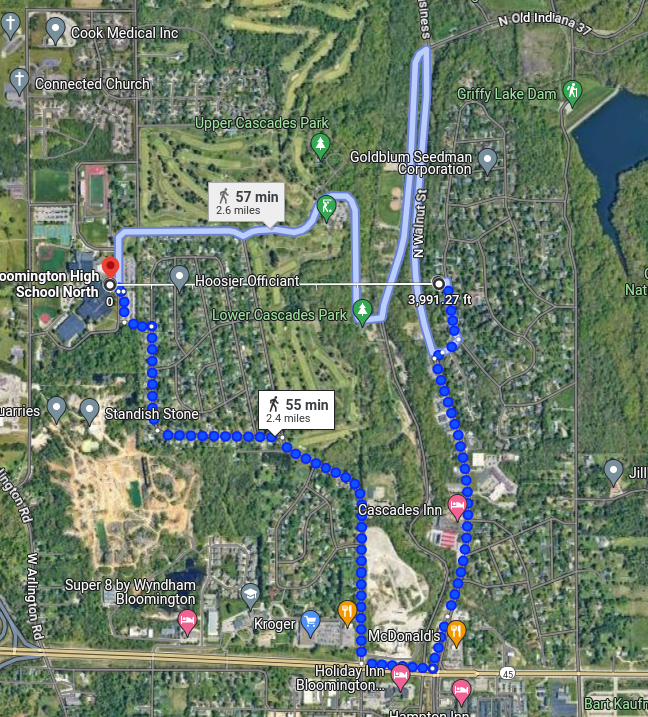
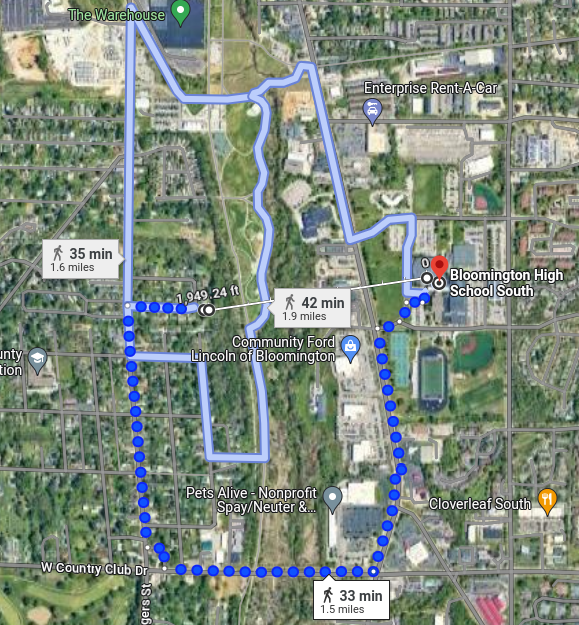
The areas surrounding high schools should be filled with job opportunities, restaurants, and places for high schoolers to hang out and experience some independence. At the same time, these should be areas that the school’s faculty and staff, as well as growing families, can afford to live in. Upzoning residential areas within a 10 minute walk of each high school to mixed-use medium density could provide anyone associated with the schools the opportunity to live close to work and their kids’ school. This could be combined with to gradually build more neighborhood-scale family-sized apartments. Bloomington can avoid the problem of isolated schools that induce lots of daily traffic by building schools as part of into future developments, like the previously mentioned mall redevelopment sites.