
The Potential of Public Housing
June 19, 2024
(Opinion by Matt Gleason): An overlooked option for improving housing costs, reducing homelessness, and enhancing our city
The Case for Public Housing in Bloomington
Public housing is often seen as a dangerous place to live, or even a looming threat to the value and safety of someone’s neighborhood. It doesn’t have to be this way. Public housing is an opportunity for the city to make life affordable for low and middle income families, improve the local housing market, grow the local economy, and provide new amenities for everyone to enjoy.
The Problems with Market Housing
High interest rates push housing developers to only build high-margin, large-scale, luxury apartments. Besides these apartments having excessively high rents, this is one of many factors that lead to the city missing medium density housing designed for families and neighborhoods, like duplexes and townhomes, known as “missing middle” housing.
Building housing is a high-risk investment, due to unexpected roadblocks or expenses, leading investors to favor buying up and renting out existing housing. However, banning investment properties won’t necessarily get them to build new housing. Instead, investors would likely look for investments in other sectors entirely.
The city’s high regulatory burden and low building height limit also restrict market supply and add to construction costs. While we make gradual progress in this area, public housing could be a more direct way of meeting the city’s housing needs.
Beautiful Public Housing
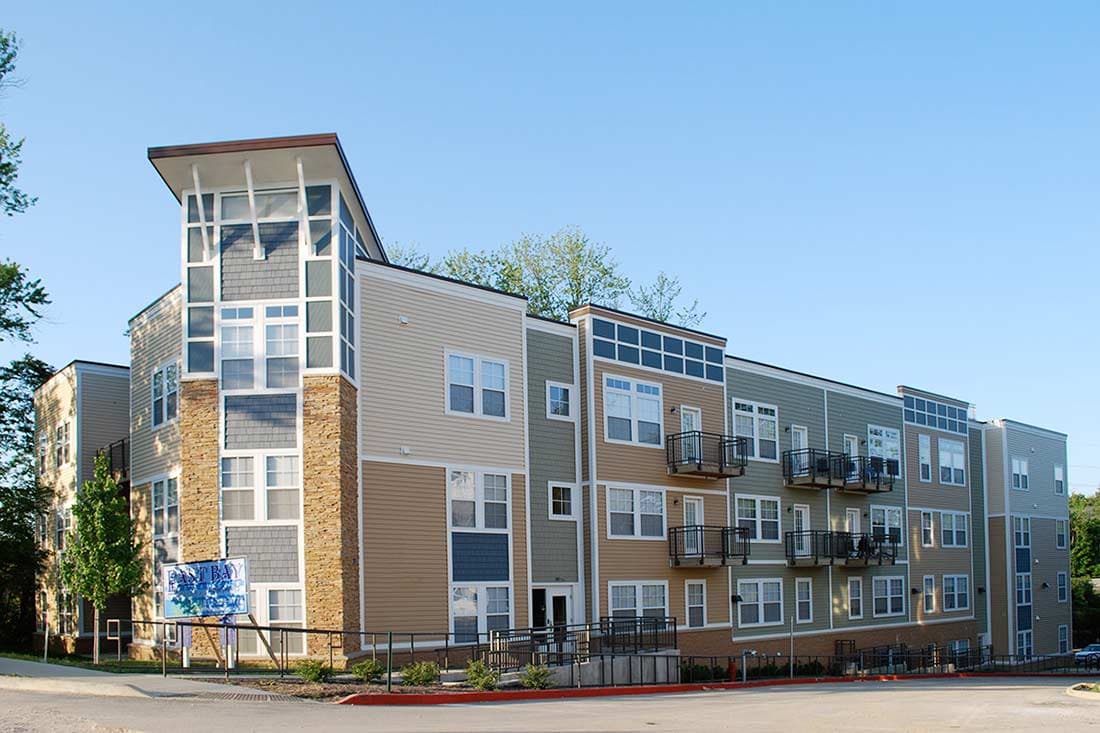
The biggest complaint people tend to have about public housing is its appearance. It tends to be built with no consideration for its appearance, and almost signals that the people living there don’t deserve to live somewhere pleasant. When someone says “the projects” or “section 8”, people think of concrete “commie blocks” that show signs of poor maintenance.
The first step in making public housing a positive for the community is using beautiful architecture that fits in with or improves the neighborhood. In Bloomington, this would mean Collegiate Gothic architecture using Indiana limestone and brick for large developments, and Colonial or Cottage styles in smaller neighborhoods. Alternatively, Neoclassical and Art-Deco styles have defined and symbolized American innovation and wealth since our founding, and would add new life to Bloomington’s landscape. The city has the opportunity to commission architects and guide the design of public housing directly, rather than the usual process of going back and forth with a private developer.
Housing over Profits
Public housing can be focused completely on housing people over making profits. Early public housing construction can be funded through low-interest municipal bonds. Once completed, rent can cover maintenance and bond repayments. When these bonds are paid off, rent can be lowered to only cover maintenance, used as public revenue, or reinvested in future public housing, which would provide exponentially more affordable housing.