News & Commentary
Is Florida the YIMBY champion sleeper state?
California, Colorado, and Oregon get a lot of attention, but the Sunshine State has been passing big YIMBY bills consistently for years,tackling the third rail of zoning reform politics head on: establishing state-level standards for local zoning codes.
By Wyatt Gordon | Edited by Joh Gehlbach
Listen to any analysis of the impact of the Electoral College, and you’ll quickly learn that over the last decade Democratic bastions like California, New York, and Illinois have been losing population to more conservative Sunbelt states like Texas, North Carolina, and Florida. Although weather is often cited as a big factor, the lower cost of living has long been a huge driver of this massive internal migration. Why pay $3,000 a month in rent for a studio apartment when you could have a three-bedroom house?
Unaffordable Florida
Although Orlando is still cheaper than San Francisco, that doesn’t mean that many Floridians aren’t struggling to afford the increasing cost of housing. The median sale price for a home in the Sunshine State was $290,000 before the pandemic. Today, it’s up to $414,000 — a 43% increase. Average rents similarly shot up from $1,238 to $1,704 per month — roughly a 39% increase.
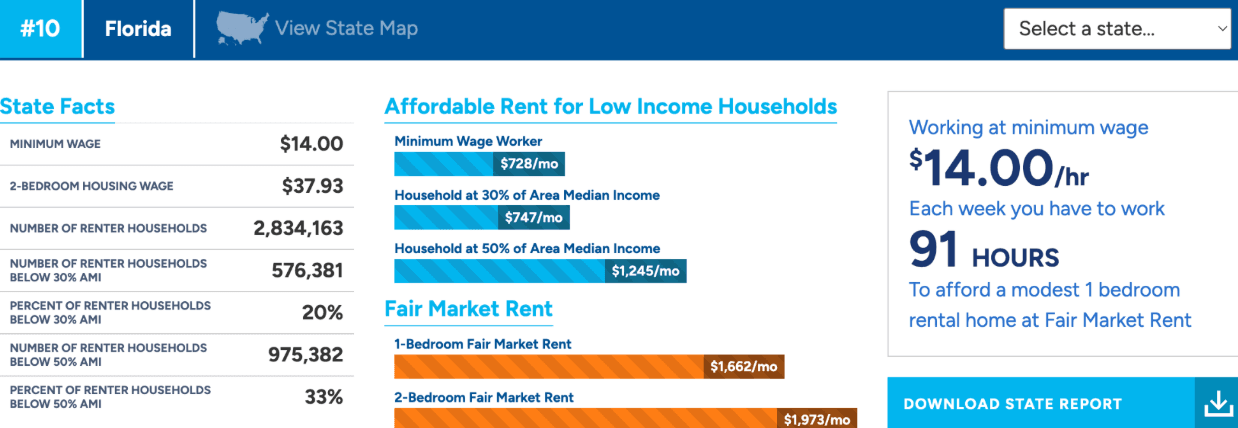
“Out of Reach: Florida” from the National Low Income Housing Coalition
Developers tried to meet the overwhelming demand for housing from people moving to Florida for its booming economy, beaches, and lax approach to the pandemic. By 2023 the state had added 240,000 new multifamily units; however, the estimated households who moved into the state was over one million — four times the increase in supply.
As always, the impact landed hardest on lower-income households. The National Low Income Housing Coalition estimates that Florida currently has 576,381 extremely-low-income renter households but only 151,562 affordable and available rental homes. That's a deficit of 424,819 homes for households at or below 30% of area median income. Hearing residents’ struggle to afford a place to live led Florida lawmakers to get serious about increasing the housing supply.
Limiting Local Control
The conservative case regarding the importance of property rights, which YIMBYs typically trot out to build bipartisan support for pro-housing bills in blue states, represents much more than rhetoric in Florida. Five years ago lawmakers in Tallahassee began to shift how they view the state’s role in championing economic and population growth.
In 2021, HB 59 mandated comprehensive plans and land development regulations to strengthen property rights provisions and allow for more growth. Although the bill wasn’t focused on housing explicitly, it set the tone for the years since: local barriers to development should be limited. With this bill, state lawmakers acknowledged what YIMBYs have long argued: local government discretion is a major barrier to growth:
“In accordance with the legislative intent expressed [...], governmental entities respect judicially acknowledged and constitutionally protected private property rights, each local government shall include in its comprehensive plan a property rights element to ensure that private property rights are considered in local decisionmaking.”
The following year, lawmakers passed SB 962, which expedited the approval of affordable housing on commercial and industrial zoned land. Although this bill didn’t streamline approvals for market-rate housing construction, it created an additional chink in the armor of local control and laid the groundwork for a bigger bill in 2023.
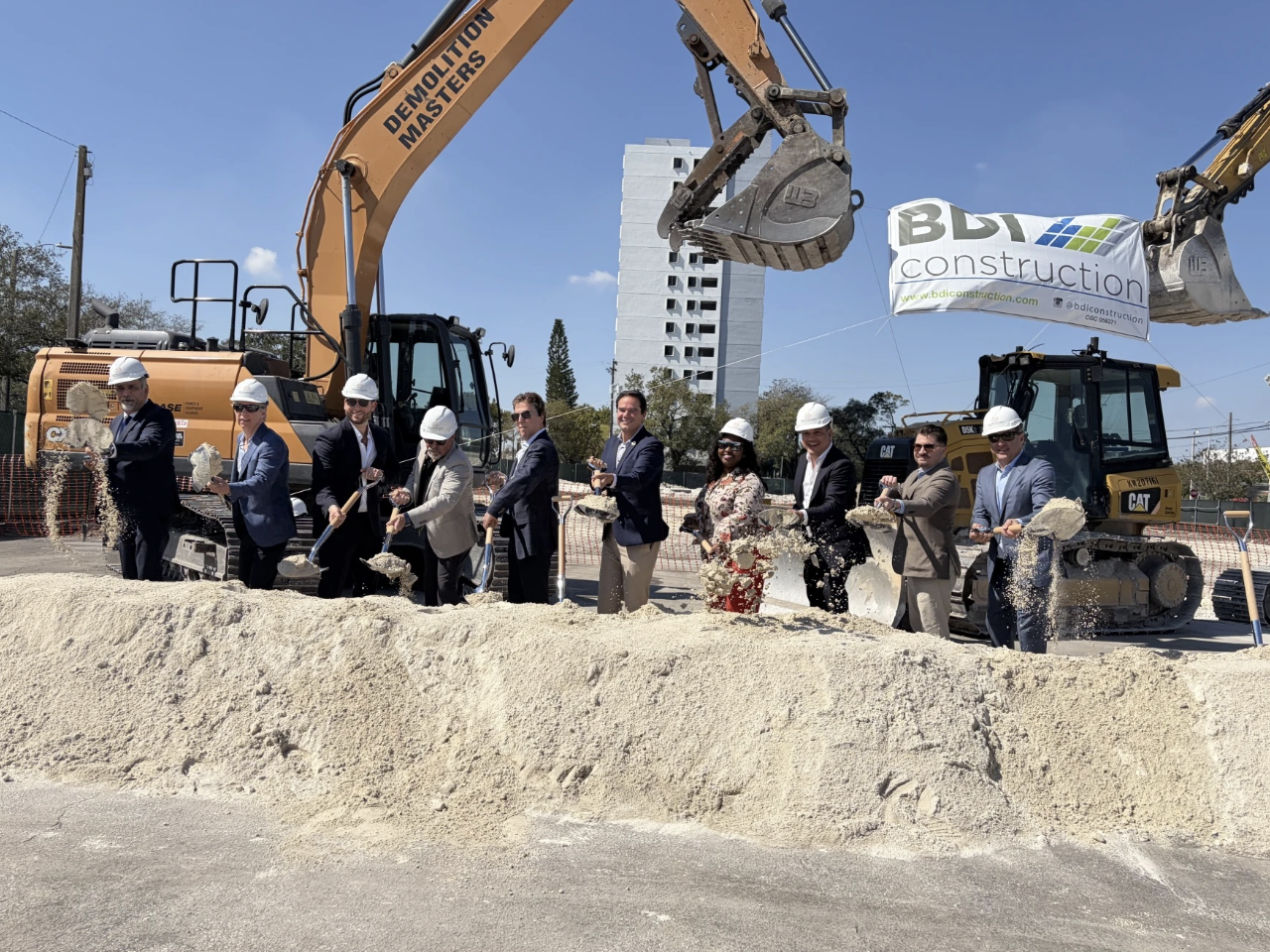
On Friday, Feb. 13, 2026, Miami-Dade officials, city commissioners, and Coral Rock Development workers lined up with shovels at 1785 NW 35th St. to officially break ground on the Dulce Vida mixed-income housing project in Allapatta. Sofia Baltodano/WLRN
YIMBYs Love Live Local
The Live Local Act paired hundreds of millions of dollars in tax incentives and affordable housing financing with powerful state preemptions of local zoning for qualifying affordable multifamily developments. The key lesson learned by lawmakers was that funding and financing are meaningless if local zoning makes it impossible for projects to be built. The 2023 bill represented such a paradigm shift in the state that Florida legislators have been improving upon the Live Local Act every year since.
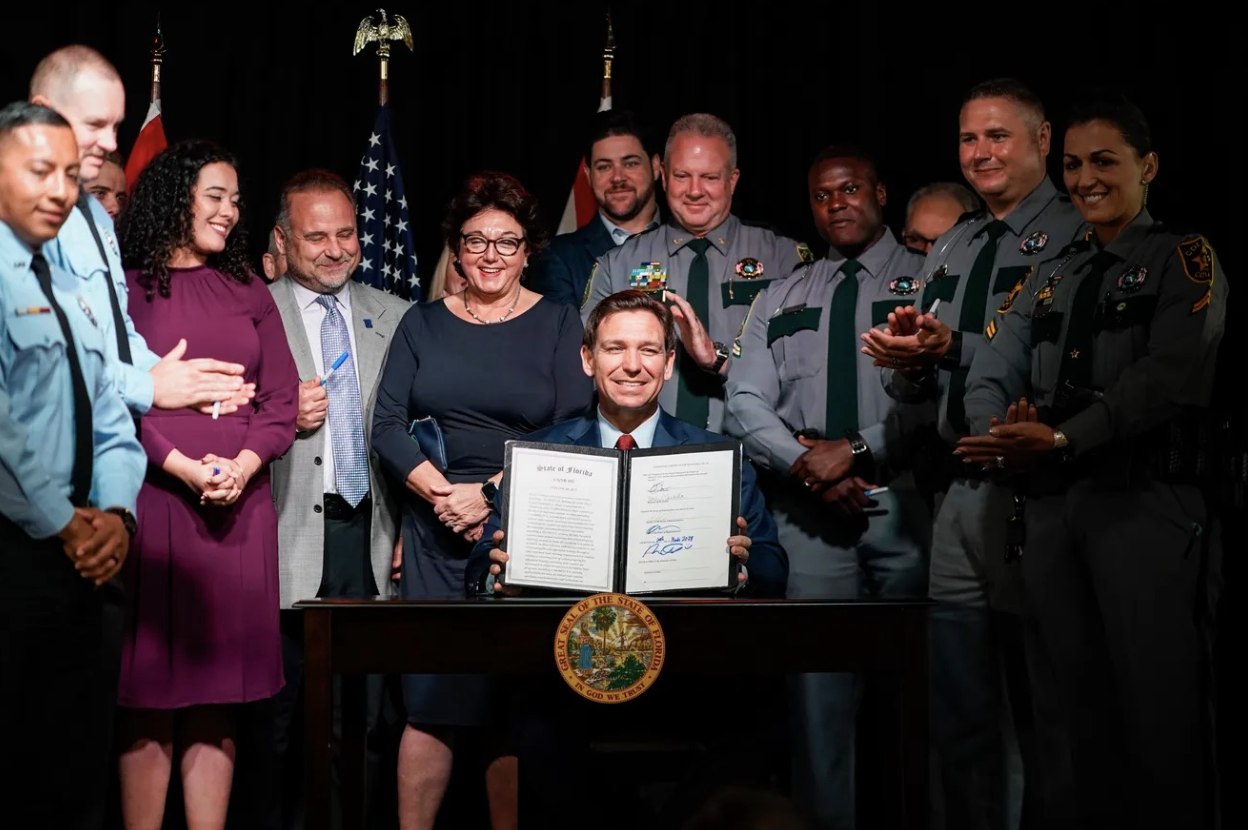
Gov. Ron DeSantis holds up the signed Senate Bill 102, also known as the “Live Local Act”, while surrounded by first responders and others during a press conference at South Street City Oven Bar and Grill in Naples on Wednesday, March 29, 2023. The bill aims to help create more affordable housing in the state. Jonah Hinebaugh/Naples Daily News
In 2024, SB 328 told localities that they can no longer limit the floor-area ratio for qualifying developments. The state exempted Live Local projects from local rules restricting the floorspace of new housing based on the lot size. The bill also requires local governments to reduce mandatory parking minimums by at least 20% for proposed projects within a half mile of certain transportation facilities.
The provisions of the 2025 expansion of Live Local read like a YIMBY wishlist: more areas where multi-family and mixed-use is allowed by right, Yes In God’s Backyard for affordable housing projects, and an exemption from local building moratoria for all qualifying developments. Maybe the most transformative policy of all was giving Live Local projects priority docketing when court cases seek to stop projects and allowing for attorney fees up to $250,000 to be repaid in order to ward off frivolous lawsuits.
HB 1389, this year’s expansion, extends the benefits of Live Local to property owned by counties, municipalities, and school districts. It also prevents localities from discriminating against projects based on the source of their financing. For example, if a housing proposal uses Low-Income Housing Tax Credits or similar tools to fund housing, they can no longer be stopped.
Teachings from Tallahassee
From Hawai’i to Virginia and across the entire United States, one of the most difficult beliefs for pro-housing advocates to dispel is the idea that local control of zoning is good for communities. While on its face, the notion that those closest to an issue should make the decision seems the most democratic, when it comes to housing, we see again and again that those who turn out to zoning meetings in opposition to new housing don’t reflect an area’s broader demographics.
Florida lawmakers have fully embraced the idea that localities often don’t make development decisions with the broader needs of the state and its residents in mind. Far from being an issue of right versus left, the politics of housing is shaped by the division between people who say yes to new neighbors and those who want to preserve their exclusive communities in amber. Florida’s recent success shows that pro-housing coalitions can be built at the state level no matter which party is in charge.


Housing won't fix itself
Every win in every city starts with people who decided to show up. Join them.