
All solutions
Legalize housing
Yes in God's Backyard
Also known as YIGBY, Faith in housing, Faith-based development
Yes in God’s Backyard is a movement focused on leveraging land owned by religious institutions (and sometimes higher education or other non-profit organizations) to alleviate the housing crisis.
Written by YIMBY LawWhat YIGBY does
Yes in God's Backyard, better known as YIGBY, is a policy enabling faith-based organizations, nonprofits, and colleges to build affordable housing on their underused land, often bypassing restrictive local zoning regulations. It aims to combat affordable housing shortages by leveraging tax-exempt property owned by churches and other tax-exempt organizations.
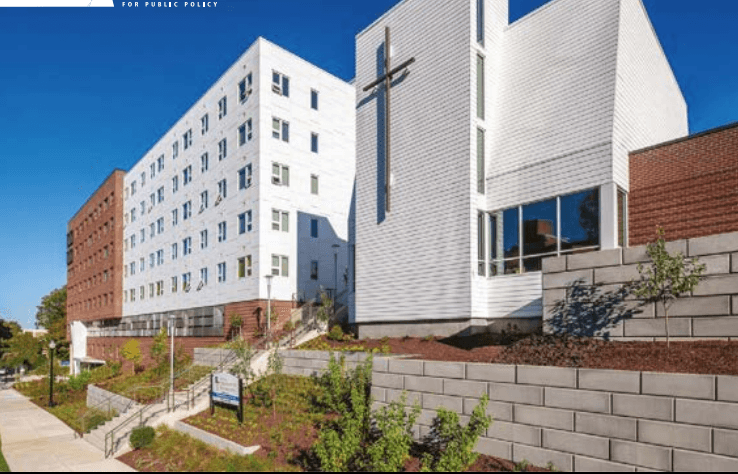
Example YIGBY Legislation
Bills that carry this policy, passed and in progress.
Backs faith institutions building affordable homes on their own land.
Yes In God's Backyard Act
- Passed
Allow projects to bypass restrictive local zoning ordinances and regulations as long as they meet objective standards and comply with health and safety rules.
Read the billCalifornia’s SB 4 (2023)
- Passed
“This bill would require that a housing development project be a use by right upon the request of an applicant who submits an application for streamlined approval, on any land owned by an independent institution of higher education or religious institution.”
Read the billVirginia’s SB 233 (2024)
Why localities should pursue Yes in God's Backyard
The problem
Churches are among the largest landowners in their communities — Virginia's faith institutions alone collectively hold roughly 74,000 acres of undeveloped land. Most of it sits idle under restrictive zoning, while the institutions themselves struggle financially with declining attendance.
The fix
Let faith institutions — and, for maximum impact, nonprofits and postsecondary institutions — build housing by right on their own land under objective standards. Gentle density in high-opportunity neighborhoods, on existing infrastructure, without large-scale redevelopment.
The politics
Start with your faith communities. YIGBY works best when religious institutions see housing development as an extension of their mission, not a threat to it. Many houses of worship own underused land but lack the resources or expertise to turn it into housing. Build relationships with local religious leaders early, understand what would make development feasible for them, and connect them with affordable housing developers and technical assistance providers.
Next, look at state law. Local zoning restrictions can prevent religious institutions from building housing on their own property, so state legislation may be necessary to create a clear path forward. California’s SB 4 (2023) established by-right approval for qualifying housing on religious institution land, while Virginia’s SB 233 (2024) expanded eligibility to include independent institutions of higher education. These examples offer a roadmap for advocates: build a broad coalition of faith leaders, affordable housing developers, home builders, and housing organizations to make the case that YIGBY supports both housing production and the long-term viability of community institutions.
The impact
YIGBY unlocks underdeveloped land for housing supply
YIGBY is a high-impact housing solution because it unlocks large amounts of well-located land for housing. Churches are often one of the largest landowners in a given community. For example, Virginia faith institutions collectively own about 74,00 acres of undeveloped land across the state.
YIGBY encourages gentle density
YIGBY expands access to high-opportunity neighborhoods without requiring large-scale redevelopment by using existing infrastructure to produce smaller, more attainable housing options in areas with strong access to jobs, schools, and transit.
YIGBY allows broad institutional flexibility
In some cases, the law can be expanded to include postsecondary education institutions or non-profit organizations to avoid potential legal challenges. A larger pool of applicable entities also serves to increase supply and ease pressure in the housing market.
“”Special exceptions for housing built on a religious institution’s land will not lead to discrimination because all homes constructed under YIGBY must follow Fair Housing Act rules.
YIMBY Law
Crafting Yes in God's Backyard Policy
The legislative process requires constant compromise and negotiation, so features must be carefully crafted to appeal to a broad base of support and overcome potential opposition. This is especially true for Yes in God’s Backyard policies, which often sit at the intersection of housing, faith, nonprofit work, and local control; requiring thoughtful provisions that respect religious autonomy while addressing neighborhood concerns and building durable political coalitions.
Must include
- By-right Development
- Expedited Permitting
- Institutional Flexibility
Watch out for
- Strict Affordability Measures
- Aesthetic Requirements
- Setbacks and floor-area ratios beyond health & safety
Why each one matters
After Yes in God's Backyard Passes
Most faith-based organizations are ready and willing to help address the housing shortage. Housing services are already central to the missions of countless houses of worship, and many others are looking to do more. To make YIGBY policy enforceable:
- 1
Ensure legislation has a clear and close effective date.
- 2
Let developments use tax abatements, grants, or direct subsidies to reduce construction costs
- 3
Add a clear enforcement mechanism that provides an appeals process or legal recourse (e.g. appeals board, third party standing, referral to Attorney General’s Office) when projects are denied.
- 4
Add clear, objective approval standards with firm timelines for local review and/or automatic approval if deadlines are missed.
Make the Case for Yes in God's Backyard
Politically, YIGBY policies often face neighborhood opposition rooted in concerns about density, traffic, and neighborhood character; as well as local officials wary of preemption of zoning authority. Successful policy design therefore requires careful coalition-building and framing to broaden local support.
Many houses of worship are struggling with declining attendance and rising operating costs. Allowing housing on underused property can help these institutions stay financially viable, maintain their presence in the neighborhood, and continue providing services to the community.
YIGBY makes it possible for teachers, seniors, young families, and local workers to live in neighborhoods with access to jobs, schools, transit, and existing infrastructure. Rather than pushing people farther away, it creates opportunities for more people to put down roots in the communities they already belong to.
Houses of worship have long served as community anchors, and housing can be a natural extension of that role. YIGBY turns underused land into homes while helping preserve the institutions, relationships, and community services that make neighborhoods stronger.
Talking points
Say them at public comment, put them in a letter to your council, or send them to a neighbor. Copy any one.
Likely Allies & Opposition for Yes in God's Backyard
The groups that tend to show up for it.
6 likely allies
- Affordable housing developers
- Community land banks
- Enterprise Community Partners
- Local religious leaders
- Nonprofits & higher-education institutions
- YIGBY & FBHI
Wins & Momentum for Yes in God's Backyard
Where it has already passed.
2wins since 2025
- 2
- 3
Research & Resources for Yes in God's Backyard
- ExplainerHow YIGBY advances housing and faith-based work
- HubYIGBY Housing
- GuideFaith-Based Development Initiative
- Case studyJordan Court at All Souls Parish
- DataReligious-institution land zoning nationwide
- Policy BriefOffice Overhauls and “God’s Backyard”: Reforms for Housing in Commercial Zones and Faith Land
- ToolkitKeep Up Your Local YIGBY Advocacy! Local Option Covers 4x More Land than New State Mandate
- Policy PaperThe Housing Potential for Land Owned by Faith-Based Organizations and Colleges
- Policy PaperReligious Tenets & Low-Income Tenants: Lessons Learned from Jordan Court
Related primers


Bringing this to your city council?
You don't have to make the case alone. Our chapters have passed policies like this before — join one, or start one, and bring the movement with you.