
Guest blog by Christopher Russell, YIMBY Los Angeles chapter volunteer leader. Adapted from original research by Dave Deek at Governance Cybernetics.
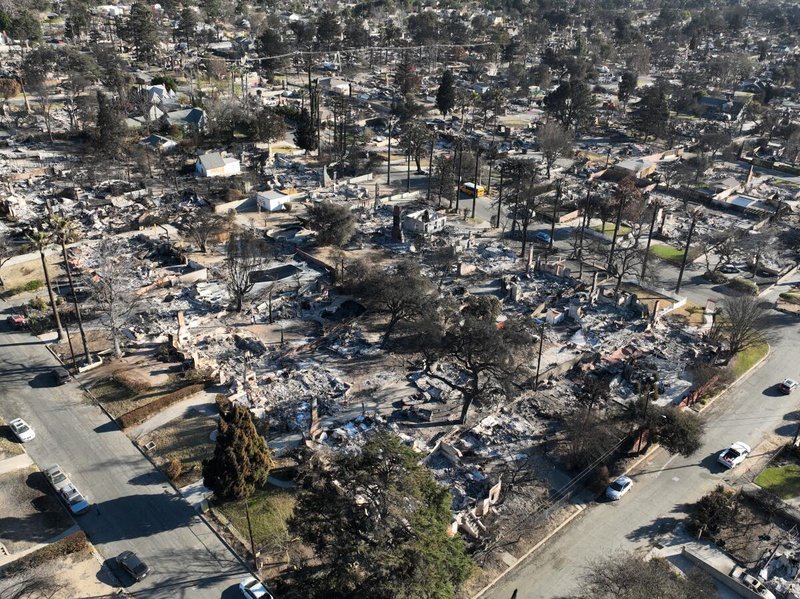
Andrew Post's parents are trying to figure out how to come home to Altadena. Their house burned in the January 2025 Eaton Fire that killed 17 people and destroyed over 7,000 structures. Like three-quarters of survivors from that fire, they're underinsured. The gap between their insurance payout and actual rebuilding costs could reach hundreds of thousands of dollars. Without the ability to split their lot and sell half, or build a duplex and use rental income to service construction debt, the math simply doesn't work. "There's a great many scenarios where my parents would never set foot again in Altadena if not for SB9," Post said.
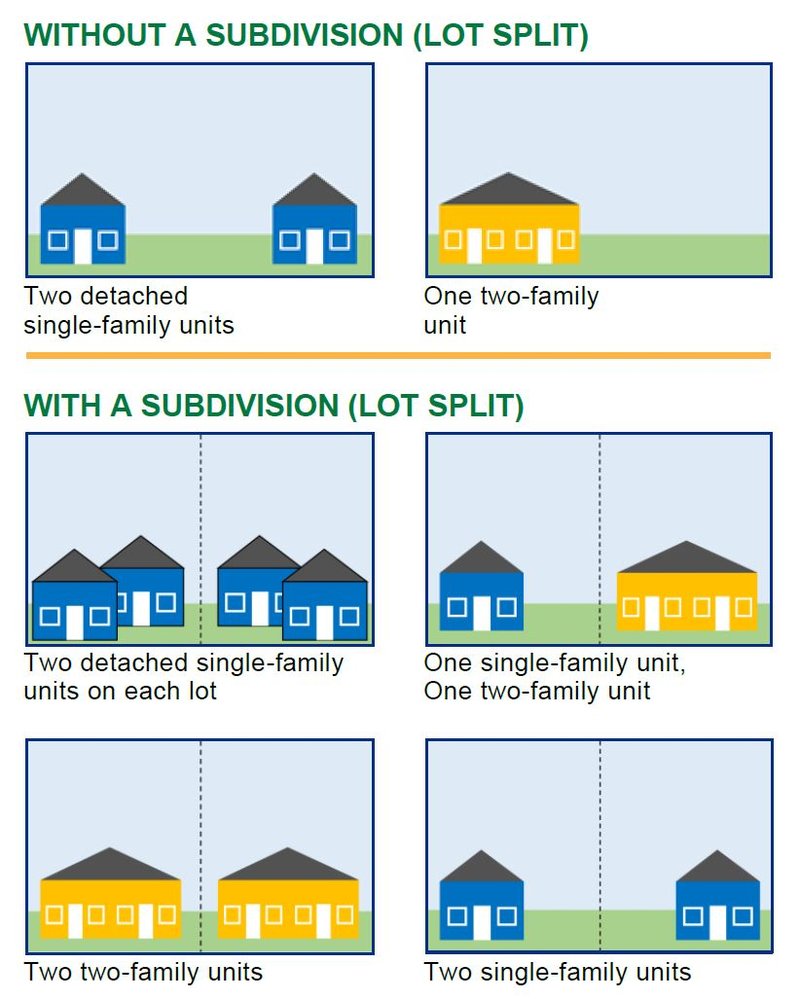
In September, Governor Newsom and LA Mayor Karen Bass suspended SB9 in fire zones across Los Angeles County. SB9 is California's law allowing property owners to build duplexes or split single-family lots. The stated rationale for this suspension was evacuation safety. The actual effect is that only the wealthiest homeowners can afford to rebuild.
Victoria Knapp, chair of the Altadena Town Council, put it plainly: "Without the payouts we're legally owed, only the wealthiest will be able to rebuild." The ban doesn't prevent density. It prevents options, and options are exactly what fire survivors need.
The Underinsurance Crisis Makes Flexibility Essential
The scale of underinsurance in California fires is staggering. Seventy-five percent of LA Eaton Fire survivors report being underinsured, with one Altadena resident facing a $1.2 million insurance gap.
"75% of LA Eaton Fire survivors report being underinsured, with one Altadena resident facing a $1.2 million insurance gap."
This is a structural feature of how insurance markets have collapsed in high-risk areas. State Farm, Allstate, and other major carriers stopped writing new policies in fire-prone zones. Those that remain have raised premiums to unaffordable levels or capped coverage below replacement costs. "Guaranteed replacement cost" policies have limits that don't keep pace with construction’s cost inflation. California's FAIR Plan, the state's insurer of last resort, is financially strained and provides inferior coverage.
SB9 provides critical tools for underinsured homeowners to close the gap:
- Split lots and sell half to generate rebuilding funds
- Build duplexes and use rental income to finance reconstruction
- Create separate units for multiple generations to share rebuilt properties
Without these options, middle-class and lower-income survivors who use lot-split revenue or rental income strategies will be forced to sell and leave. Only homeowners wealthy enough to absorb six-figure insurance gaps will remain. The ban selects for wealth.
Seven years after the Camp Fire (Butte County, near Chico) killed 85 people and destroyed 11,000 homes in Paradise, only 3,000 single-family homes and 600 multi-family units have been rebuilt. Nine months after the January 2025 LA fires, the county had issued only seven rebuilding permits by mid-May despite Mayor Bass and Governor Newsom's executive actions to streamline permitting. The bottleneck isn't always bureaucracy. It's that most survivors can't afford to rebuild.
The Safety Argument Doesn't Survive Scrutiny
The central claim against SB9 is that duplexes make evacuations more dangerous. This collapses under examination.
What actually happened on January 7th in Pacific Palisades (West Los Angeles):
- The first evacuation order came 40 minutes after homes were already burning
- Traffic was gridlocked before the order because residents fled on their own
- Only two paved roads connect the Palisades Highlands: four-lane Palisades Drive and narrow two-lane Sunset Boulevard
- Residents abandoned vehicles along Pacific Coast Highway and took refuge in the ocean
The binding constraint was infrastructure designed decades ago for a single-family community. The neighborhood was single-family zoned before the fire. It had congested evacuations before the fire. In 2020, the Pacific Palisades Community Council complained to City Council that evacuation traffic backups endangered the public. Adding a duplex to an existing parcel doesn't change the road network that already failed.
What About More Traffic?
The traffic concern merits direct response. A duplex adds one additional unit to a parcel. But the alternative to allowing duplexes isn't static occupancy. It's either a vacant lot or a property accessible only to homeowners resourced enough to absorb insurance gaps. The marginal traffic impact of one additional household is negligible compared to leaving entire neighborhoods empty or restricting them to the wealthy.
What Actually Keeps Homes Safe
Defensible space and building materials protect structures. A Nature Communications study published in August 2025 analyzed five major California fires using machine learning. Structure survivability could be predicted to 82% accuracy based on structure spacing, fire exposure, building hardening, and defensible space. A hypothetical 52% reduction in losses could be achieved through home hardening and defensible space alone.
Clearing vegetation within 1.5 meters of a structure (Zone 0) is one of the most effective actions. When paired with home-hardening features like non-combustible siding, enclosed eaves, ember-resistant vents, and tempered glass windows, predicted losses dropped by 48%. The California Office of the State Fire Marshal is explicit: large wildfires are inevitable, but disastrous house loss can be prevented by reducing hazardous conditions at and immediately around buildings before fires start.
The Legislature already addressed fire safety when drafting SB9. Projects in high or very high fire hazard zones must either implement fire hazard mitigation measures per existing building standards or be excluded from eligibility (Government Code § 65913.4(a)(6)(D)). This provision demonstrates thoughtful governance. The law requires safety standards rather than ignoring them.
"The Legislature already addressed fire safety when drafting SB9. Projects in high or very high fire hazard zones must either implement fire hazard mitigation measures per existing building standards or be excluded from eligibility."
The Pattern of Weaponized Safety Claims

The Playbook Hasn't Changed
Safety and traffic rationales have justified exclusionary zoning since their legal inception. The 1926 Euclid v. Ambler Supreme Court decision, which established the constitutionality of zoning, quoted characterizations of apartments as "mere parasites" bringing "disturbing noises incident to increased traffic." These claims didn't require empirical grounding. They required only the specter of harm.
The same pattern continues. City Councilwoman Traci Park, whose district includes Pacific Palisades, stated: "After what this community just lived through, the idea of forcing more density into a high-fire-severity zone demonstrates this isn't about sound housing policy, but ideological extremism."
SB9 doesn't force density anywhere. It gives property owners options. Calling property rights "ideological extremism" while defending mandatory single-family zoning inverts the historical relationship between exclusion and ideology. The Century Foundation's analysis is direct: exclusionary zoning is a legal practice used for decades to keep lower-income families out of high-opportunity areas. The mechanism is facially neutral, invoking safety, traffic, and "community character." But the outcome is the same. Neighborhoods sort by who can afford entry, which has always tracked to race and class in California.
What Serious Fire Policy Would Actually Address
If the goal is fire safety rather than exclusion, policymakers could focus on interventions that reduce risk without blocking survivor rebuild options:
Suppression capacity: Half of LAFD's 183 fire trucks sat idle on January 7th because of staffing shortages. Fire truck prices have tripled over the past decade, from under $500,000 to $1 million for pumpers and $2 million for ladders. Delivery times stretched from under a year to 2-4 years due to industry consolidation. Addressing procurement bottlenecks and funding adequate staffing would improve safety far more than banning duplexes.
Evacuation infrastructure: Add egress routes where terrain permits. Create designated temporary refuge areas. Improve traffic signal coordination during emergencies. These are engineering problems with engineering solutions.
Building standards: Require all rebuilds to meet modern Chapter 7A fire-resistant standards. Mandate defensible space with noncombustible materials within five feet of structures. Create mechanisms for coordinated fire hardening at community scale.
Notification systems: The 40-minute lag between fire start and evacuation orders in Palisades wasn't caused by density. It was a failure of emergency communication. Improving alert systems would save lives regardless of housing type.
None of these require banning duplexes. All would reduce fire risk.
The Legal Case

YIMBY Law has filed suit challenging the Governor's order. Their argument is straightforward. Emergency powers are designed for crisis response: debris removal, temporary housing, infrastructure repair. The order doesn't suspend SB9 to facilitate immediate fire recovery. It suspends SB9 to prevent hypothetical future evacuations in neighborhoods that don't exist yet. That's prospective policymaking dressed as emergency response.
The Legislature made a considered judgment: allow SB9 in fire zones with safety mitigation, or exclude projects that can't meet standards. The Governor's order substitutes his judgment for the Legislature's.
California needs both supply-side reforms like SB9 and action on structural failures in insurance and construction markets. Zoning reform removes legal barriers. Market reforms remove economic barriers. Survivors need both.
The Governor's order is perverse in its selectivity. It bans SB9 while ignoring insurance market failures, construction cost drivers, inadequate road networks, broken notification systems, and the absence of defensible space mandates. It removes a home rebuilding option only to leave every other barrier intact.
What Survivors Deserve
Andrew Post's parents are trying to figure out how to go home. They're not alone. Thousands of families across fire-scarred Los Angeles County are doing the same math: insurance payout minus rebuilding costs equals a number they can't afford. Some will have family wealth to draw on, while others will have high enough incomes to secure construction loans despite the gap. Many will have neither.
For those families, SB9 isn't about ideology or density. It's about survival. The ability to split a lot or build a duplex is the difference between returning home and being permanently displaced. Banning that option in the name of safety, while doing nothing to address actual fire risk or the structural barriers to rebuilding, turns fire recovery into a convenient mechanism for wealth-based exclusion.
That's not fire safety policy. That's just exclusion with better branding.
Keep up with our YIMBY Los Angeles chapter by signing up for their email list here.