
Guest blog by Scott Lucas
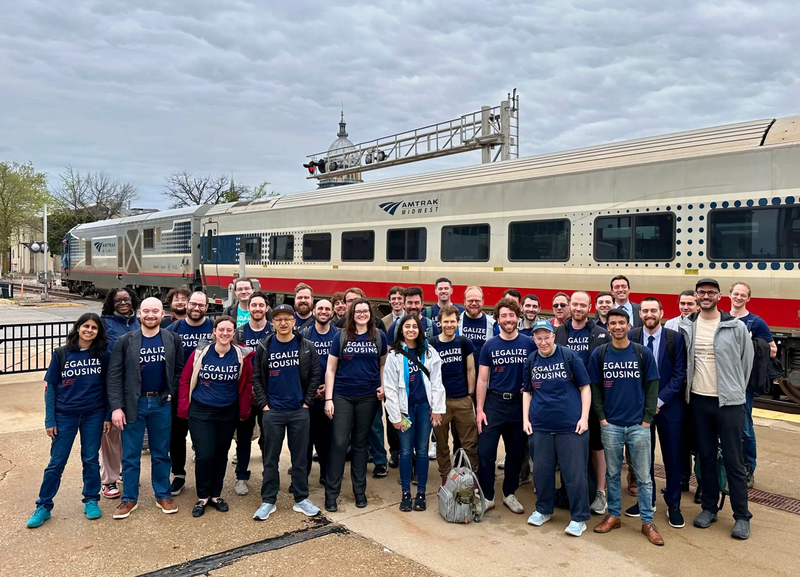
The town of Northfield, Illinois — population 5,700 — sits some 25 miles to the north of downtown Chicago. A village with great restaurants, cafes, parks, and easy access to commuter trains, Northfield is the perfect place to build more housing. This spring, its Plan & Zoning commission heard a proposal to build 92 new units of apartments and would require multiple variances.
It was the kind of project that could make a real difference in the cost of housing for a well-off suburban town. In fact, if built, it could house about 2.5% of its current population. But for YIMBYs in Illinois like the members of Abundant Housing Illinois, projects like these are often easy to miss. The local news didn’t cover it, and the information about the project and schedule was squirreled away on a PDF hosted on the town’s website.
Local YIMBY chapters, by no fault of their own, frequently miss projects like this one, especially when they’re proposed outside of major cities. There are many such projects across the country that are big enough to be important, but too hard to find out about for YIMBY volunteer leaders (Leads) to advocate for.
Thanks to a new research tool called Listen Public, pro-housing activists can now find harder-to-discover projects like this one. Currently, YIMBY Action is using Listen Public to follow development proposals in over 350 jurisdictions across the country.
“The big success … is that we are seeing more proposals in more areas, even in places we are already active in,” said Pranay Bhargava, the Chapter Systems Manager for YIMBY Action. “We find stuff in the Bay Area all the time that we didn’t know about, and if it helps us there, it helps us everywhere — the Research Triangle, Nashville, the Twin Cities, Chicago, and other places where we don’t always have the biggest teams.”
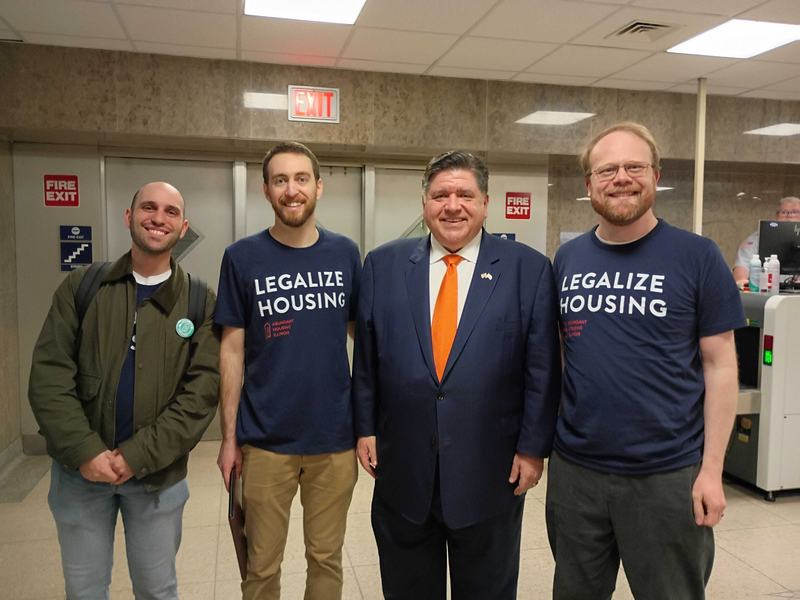
In September, YIMBY Action became one of the first groups to use Listen Public, which was founded by software engineer Mark Kinney. “We build infrastructure for the public record,” said Kinney. “Everyone should be able to rely on primary sources.”
The way the system works is straightforward: YIMBY Action gives Listen Public the parameters for the kinds of projects about which it would like to be notified. Say, for example, all developments over 100 units in every city in South Carolina. Listen Public then watches everything each local jurisdiction publishes — agendas, staff reports, hearing schedules. When such a project comes up, YIMBY Action gets the specific records and page numbers where it's mentioned. Local organizers can then decide if and how they want to get involved — maybe by sending letters of support or speaking at public meetings. It’s all information that is available to the public, but is hard and time consuming to find.
During its initial test phase, YIMBY Action used Listen Public in three places — Los Angeles, Denver, and Chicago. In a typical week, it surfaced ten proposals, seven of which got forwarded to local chapters to consider taking action. “Now we are getting proposals all over the place,” said Bhargava. (As we were talking, Listen Public provided nine new development hearings, including ones in Bloomington, Indiana and Chantilly, Virginia.)
Staying on top of information about public hearings can be a difficult job, involving sifting through hundreds of pages of PDFs. And local jurisdictions don’t always make that information easily accessible, partly because they don’t always have the incentive to do so and partly because it’s a daunting task. So that means that often, YIMBY activists find out about projects they would like to support in ad hoc ways.
“Prior, it was, did you hear about a proposal from someone else?” said Bhargava. “In Chicago, for example, the way we did it was that I subscribed to my ward’s newsletter, and if I heard, I would let folks know. Or maybe you see a flier taped to the light pole by some NIMBY complaining about housing.”
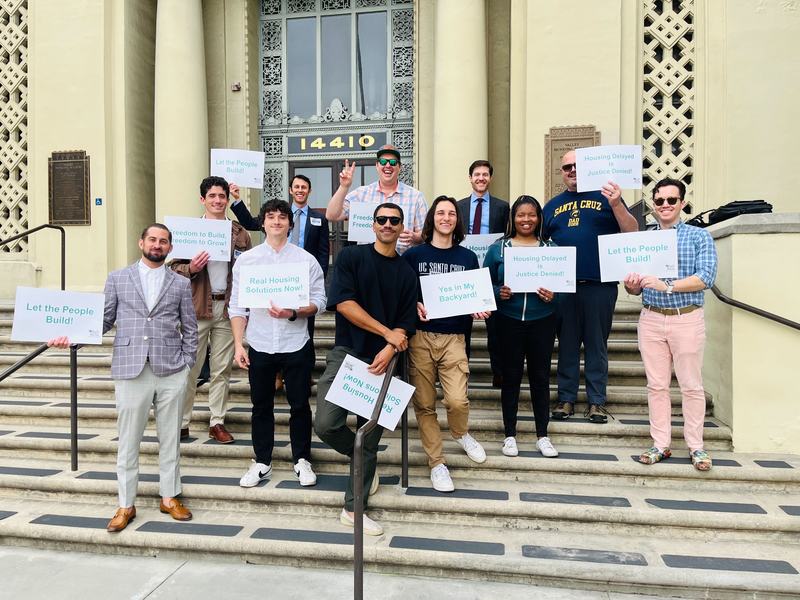
Listen Public is one of a number of new AI tools that are being used by activists to make their voices heard. But unlike AI tools used by NIMBYs (one service in the UK offers £99 AI-generated objection letters), Listen Public does not AI-generate advocacy. It makes primary sources easy to access and understand, and leaves people to decide what to do or say about it. This means local city councils won’t be deluged with AI-generated slop, but instead hear from real people using their own voices.
“We’ll get the address, the hearing date, sometimes a link to the virtual hearing. We can go through and decide to send them to our local Chapter Leads,” said Bhargava, who thinks that Listen Public is an ideal use for AI, since it doesn’t take jobs away from anyone, but rather makes it easier to do the jobs that people already have.
Although Listen Public’s marquee use case is housing, Kinney, who has a major update planned for June, is expanding to other policy areas as well. “A lot of what we talk about is the quality of public discourse,” he said. “It’s not hard to imagine the risks that AI introduces. One aspiration of Listen Public is to provide a counterweight: rather than adding noise or worse to the public record, what if we used AI to improve its quality?”