
A Delay For Lobby Day with in a 60 Day Session
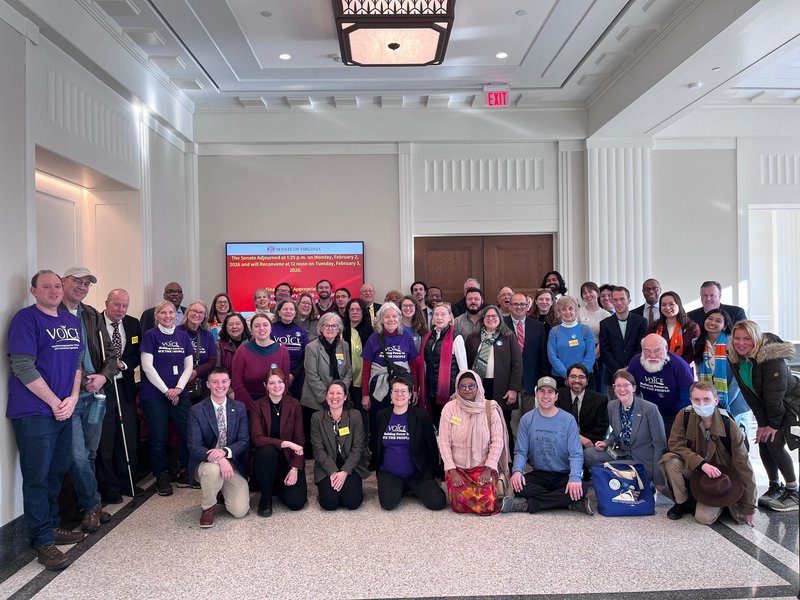
There’s very little that can stop people determined to have their voices heard in the state capitol. But there are some things that can delay them, like an epic snow and ice storm that forced the Commonwealth Housing Coalition, a group of over sixty pro-housing organizations, to reschedule its lobby day in Richmond, the capital of Virginia.
So when YIMBYs finally arrived at the historical legislative building, they had plenty of time to get ready. “We sent over 12,000 emails in the lead up,” explained Joh Gehlbach, the Senior Campaigns Manager for YIMBY Action.
Organizing a lobbying day — in which people visit the state legislature to meet with elected officials and speak at committee hearings — isn’t easy in Virginia. It’s a large state and narrowly divided along party lines. Virginia also has a short legislative session of just sixty days in even-numbered years. (The final day is March 14.) The chaotic sprint favors insiders, lobbyists, and the well-connected over ordinary people. “It’s very insular because it’s so fast,” said Gehlbach. “When you have to be in Richmond at 7:30 in the morning, and you’re not paid to be there, it’s hard to be there.”
Building a Coalition and Turning Out a Crowd
It took a lot of work — and a very active WhatsApp channel — by the lead organizations of the coalition, which included Virginians Organized for Community Interfaith Engagement (VOICE), Housing Opportunities Made Equal (HOME) of Virginia, and YIMBY Action. Turning out more than 75 people to support housing was a big deal. Bigger still were the four bills they supported — to eliminate parking minimums, ease the regulations on multifamily buildings, promote ADUs, and incentivize housing built on lands owned by religious organizations.
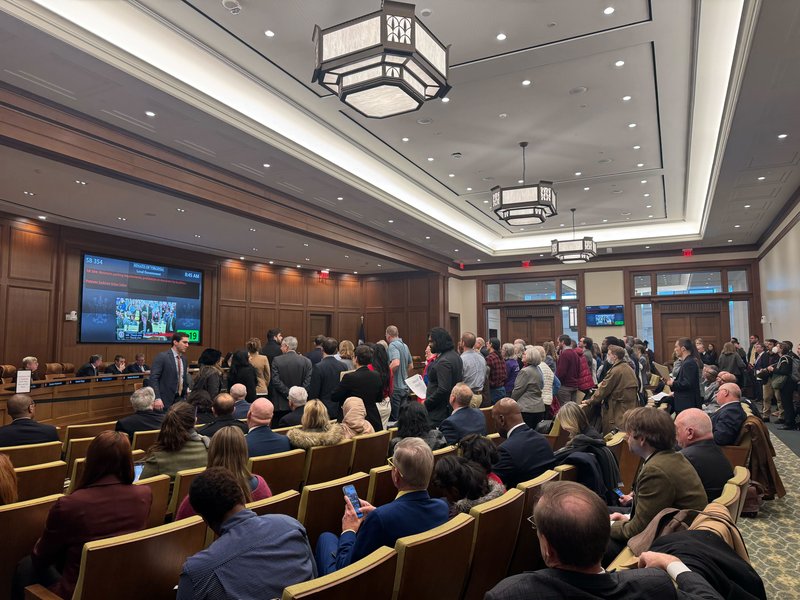
After arriving and getting their bearings, the group met with members of the Senate Local Government committee ahead of their 8:30 am meeting, where the four bills would be heard. “We were excited and anxious,” said Gehlbach. The organizers fielded a lot of questions from people who had never been there before. Like, “Where are the bathrooms?” and, “What happens if the committee vote is a tie?” That turned out to be an important question, because the parking minimum bill tied 7-7.
As it happens, a tie meant it lost.
“That sucked,” said Gehlbach. “You could feel the energy change.” Would every bill suffer the same fate? That would mean a lot of lobbying for no result.
The next bill up was the one to allow multifamily buildings by-right. A long line of supporters came to the microphone to speak in favor, followed by a few opponents representing local governments and historical preservationists. At the end of public comment, a speaker from a local planning commission rose to say that although he was “neutral” on the bill, he wanted to point out that there was no guarantee in the bill that housing costs would come down: “There’s a fallacy here that says, ‘We’re going to build more houses and they are dramatically going to become cheaper automatically.’”
“Is it your position that supply does not influence price?” responded Senator Jeremy McPike, the committee chair. The energy in the room immediately brightened — and the bill ended up passing, as did the faith-in-housing bill. (Lacking the votes, the ADU bill was passed by for the week.)
It wasn’t perfect, but it wasn’t bad for a morning’s work — out of the four YIMBY bills, two passed, along with an additional one lifting restrictions on manufactured homes.
Forming Strategic Relationships with Electeds
After that, the group broke for lunch and returned in the afternoon to meet with elected officials and their staff. Even after years of local advocacy, a lot of the most valuable work in Virginia is still just introducing YIMBYism to elected officials. “We usually have to explain the acronym,” said Gehlbach. “YIMBY hasn’t really hit, hasn’t permeated yet. But if you have an official familiar with housing, or from a locality that has done a zoning code rewrite they usually know what we mean.”
YIMBYism is a broad ideological coalition, which helps in a state as closely divided as Virginia. Those members of the group with more of a social-justice bent met with liberal members, while those who come at housing from a libertarian angle met with conservatives. It’s hard work but it pays off, especially when talking to young staffers struggling to afford their own housing on meager salaries. “An advocate had one conversation with a Republican staffer from the southwest who got teary eyed,” said Gehlbach. “Their boss ended up abstaining on the vote on housing near jobs, voted yes on faith in housing, and took a walk during parking.” That’s a big deal — moving an elected official from no to an abstention is often the first step to earning a yes vote in future years.
And there’s another benefit, too — no matter how many YIMBY bills become law this year, it’s vital to continue engaging people with the democratic process at a time when our country’s norms are fast eroding. As Gehlbach said, “YIMBYism, and the engagement with democracy, is a way of engaging with the march of authoritarianism. It’s a big deal.”
If you want to get involved in advocacy work like this, become a YIMBY Action member!