
By David Klein
Across the United States, communities are struggling with the same problem: there simply aren’t enough homes. Years of restrictive zoning, lengthy approval processes, and local veto points have made it difficult to build housing even in places where demand is highest.
Now, states are beginning to take action.
Lawmakers across the country are advancing reforms designed to make it easier to build housing by reducing discretionary barriers, expanding by-right development, and unlocking land that has long been off-limits to homes.
These proposals take different approaches like opening commercial corridors, allowing housing on faith-based land, or removing permitting bottlenecks—but they share a common goal: turning housing policy on paper into homes people can actually live in.
Several states are already testing what this next phase of housing reform could look like.
Virginia: HB 888 – Targeted Parking Reform
In many Virginia communities, local zoning rules require developers to include a minimum number of off-street parking spaces with new housing. On the surface, this just seems like a technical detail, but these mandates have a major impact on what gets built. Each required parking space adds significant cost and takes up valuable land—meaning fewer homes can be built and the homes that are built are more expensive.
HB 888 aims to address that barrier.
The bill would limit how much parking local governments can require for new housing in designated areas, capping minimums at 0.5 spaces per unit for multifamily and mixed-use developments and one space per unit for smaller residential projects. It would also prohibit localities from imposing higher parking requirements in those areas and require jurisdictions with populations over 20,000 to allow administrative reductions in parking requirements elsewhere.
The legislation has passed the state legislature and is now headed to the governor’s desk for signature, marking a significant step forward for parking reform in Virginia.
These changes matter because parking mandates don’t just shape buildings—they shape whether housing gets built at all. By reducing excessive requirements, HB 888 would make it possible to build more homes on the same land and at lower cost, especially in areas where demand is highest. Importantly, these reforms do not eliminate parking all together, but allow builders to determine how much parking is appropriate based on the needs of residents and the realities of each project. Reforms like this remove a typically hidden constraint on housing production, helping turn potential projects into actual homes.
Illinois: SB 3187 – Faith-Based Housing and Mixed-Use By-Right Act
Across Illinois, many churches, synagogues, and other religious institutions sit on land that once supported larger congregations. As membership declines and maintenance costs rise, some are looking for ways to use that land to better serve their communities—including building housing.
SB 3187 would make that much easier.
The Faith-Based Housing and Mixed-Use By-Right Act would require local governments to allow multifamily and mixed-use housing by right on land owned by religious institutions. Projects meeting objective health and safety standards could move forward without discretionary zoning approvals like special use permits or public hearings. The bill applies whether or not the religious institution continues to operate on the property and allows them to partner with a developer to build housing or develop it on their own.
Faith-based organizations collectively own significant amounts of land in established neighborhoods—often near transit, jobs, and community services. But zoning rules frequently make housing projects on this land difficult to approve. By allowing housing by-right, SB 3187 removes those barriers and gives trusted community institutions a clearer path to help address the housing shortage.
Colorado: HB26-1001 – The HOME Act (Housing Opportunities Made Easier)

In many Colorado communities, valuable land owned by public institutions like schools, transit agencies, and local governments remain underused even as housing shortages continue to drive up costs.
The HOME Act aims to change that.
HB26-1001 would allow qualifying entities such as nonprofits, housing authorities, school districts, colleges, universities, and transit districts to build housing on land they already own. The bill limits certain local barriers to these projects, including restrictions on height for buildings up to three stories or 38 feet, and applies to parcels of up to five acres. Projects could also include community-serving uses like childcare alongside housing.
The legislation has already passed both chambers of the state legislature and is now headed to Governor Jared Polis’ desk for signature, signaling growing momentum for using public land to address the housing shortage.
By unlocking land already controlled by public and mission-driven institutions, the HOME Act could create new housing opportunities in locations that are often close to jobs, transit, and existing infrastructure. Research has shown that lengthy and uncertain approval processes can significantly slow housing production, making reforms that streamline development an important tool for addressing housing shortages. With the bill now on the verge of becoming law, it offers a clear example of how states can turn underused land into real housing supply.
Other states are focusing on a different phase of the housing process: what happens after a project is approved.
California: AB 1621 – Planning and Zoning Law: postentitlement phase permits: Housing Accountability Act.

In many cities, getting a housing project approved doesn’t mean construction can begin. In fact, it often doesn’t. Even after developers secure zoning approvals, local agencies can delay projects for months or years through repeated permit reviews, new requirements, and lengthy appeals.
California’s AB 1621 aims to stop that practice.
The bill would limit local governments to two rounds of plan review, prevent cities from adding new conditions after a permit has already been approved, and require faster decisions on permit appeals. If a city violates these rules, the delay could be treated as a denial under the California Housing Accountability Act—giving builders a legal path to force the permit to move forward.
Why does this matter? Because many housing projects that appear “approved” on paper never actually get built. By tightening the rules around the permitting process, AB 1621 is designed to ensure that once housing gets the green light, it can actually break ground.
A Turning Point in Housing Policy
While these bills focus on different barriers to housing, they share a common pattern in how state policy is approaching housing reform.
Many expand by-right development, meaning housing that meets objective standards can move forward without lengthy political hearings. Others reduce discretionary approval processes that often allow projects to be delayed or blocked even after meeting the rules. Some establish statewide minimum standards, ensuring that cities cannot simply opt out of housing production, while others unlock new categories of land, such as institutional property, or remove hidden constraints like excessive parking mandates.
Taken together, these reforms reflect a growing recognition that the housing shortage is not only about funding or subsidies. It is also about the institutional rules that determine whether housing can be built in the first place.
As YIMBY Action board member Jeff Fong has argued, many local land-use systems function as a kind of “vetocracy,” where the voices most empowered in public processes are often those seeking to delay or block housing. In those environments, even modest reforms can become extremely difficult to pass at the local level.
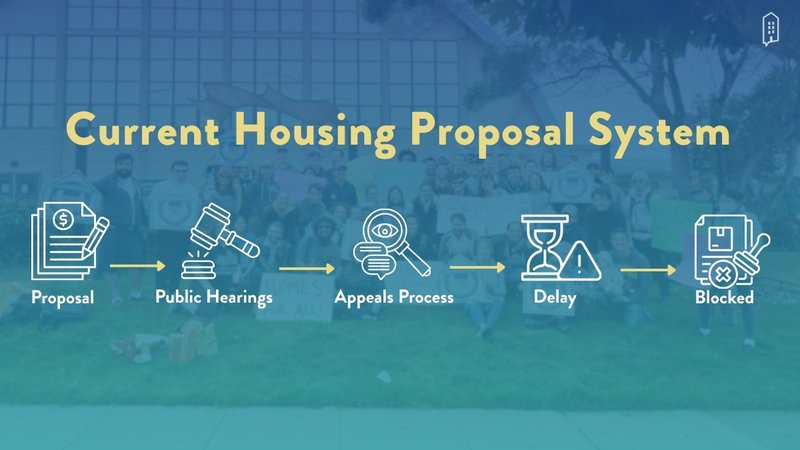
Increasingly, states are stepping in to rebalance that system.
Rather than micromanaging local planning, these reforms establish clearer statewide rules that make housing easier to build in places where it has long been blocked. Reducing parking mandates, allowing homes on institutional land, enabling housing by right, and preventing endless permitting delays are all part of the same broader strategy: removing structural barriers that prevent homes from being built.
The result is a model focused less on negotiating individual projects and more on creating predictable pathways for housing to move forward. When homes meet objective standards, they should be allowed to proceed.
With some of these reforms already advancing through state legislatures, and in some cases nearing final approval, this shift is no longer theoretical. It is beginning to translate into real policy change, making clear that winning on housing requires sustained advocacy at both the local and state levels.
If this trend continues, 2026 could mark an important turning point—one where states play a larger role in ensuring that local rules do not stand in the way of urgently needed housing.
Get Involved

Across the country, YIMBY Action members are pushing for policies that make it easier to build homes in the communities where people want to live. The reforms highlighted here, from opening commercial corridors to housing to unlocking faith-owned land and streamlining approvals, are all the result of sustained organizing by people who believe that housing should be abundant and accessible.
If you live in one of the states highlighted here, consider getting involved with your local YIMBY Action chapter and helping move these reforms forward. And if you live elsewhere, Start a new chapter to bring this advocacy to your community.
Join YIMBY Action and help power the movement working to turn housing policy into homes.